Three minutes to form the universe
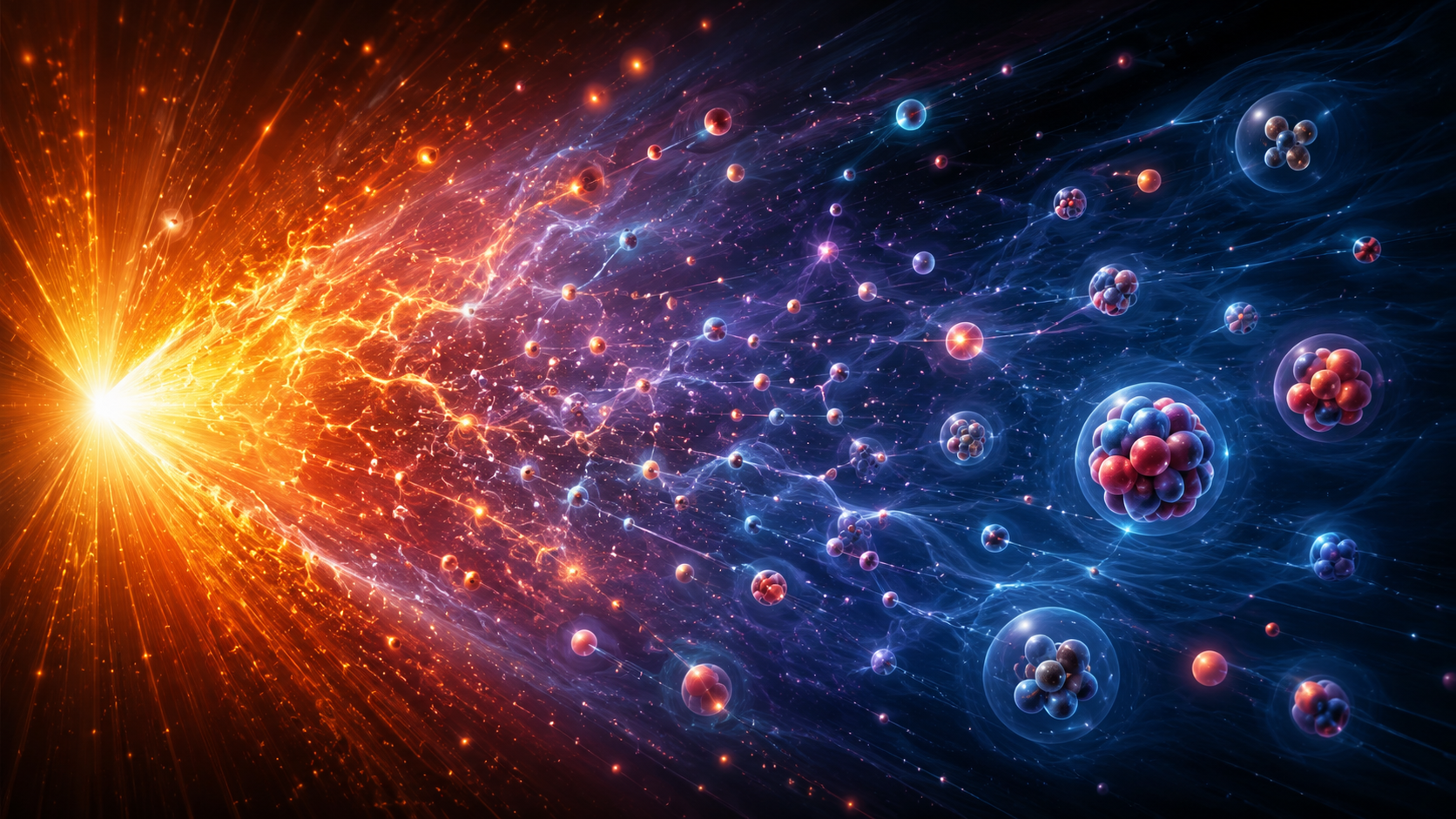
A scientific timeline exploring the first three minutes of the universe, from its initial conditions of extreme temperature and density to the formation of the first light nuclei.
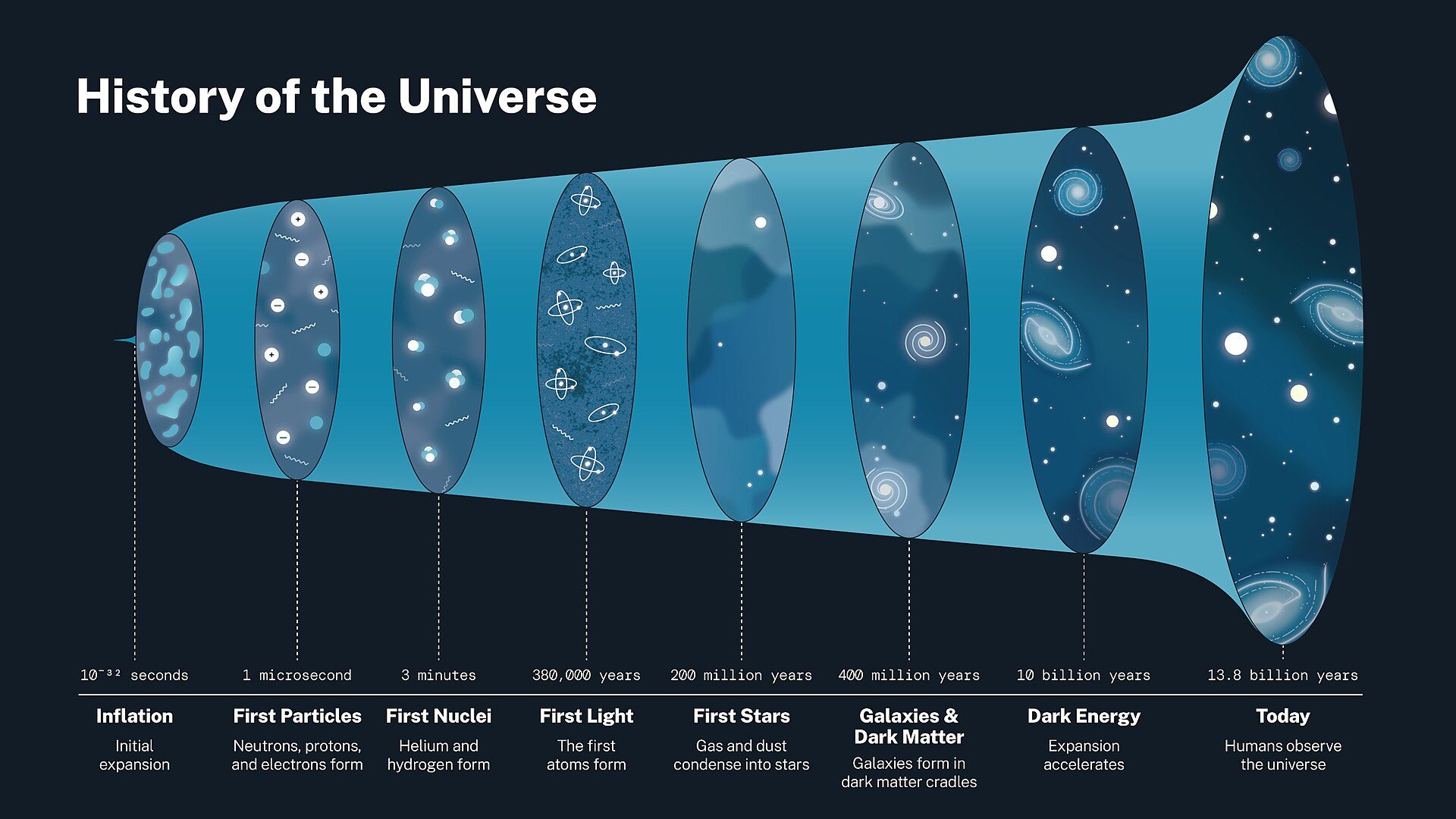
The journey shows, step by step, how the expansion and cooling of the universe gave rise to different physical stages: cosmic inflation, the emergence of elementary particles, quarks and gluons, leptons, neutrinos, matter and antimatter, the formation of protons and neutrons, deuterium, helium and traces of lithium.
Each entry combines accessible explanations, scientific context, images, videos and links for further exploration, turning an almost unimaginable timescale into a clear, visual and rigorous sequence. It demonstrates how TimeDivers can represent not only human history, but also extreme scientific processes, with events, periods, multimedia resources and detailed descriptions organized in a clear, easy-to-navigate timeline.

Export timeline
Export format
Export all currently filtered vertical timeline events as PNG or PDF.
T = 0: the limit of the hot Big Bang model
The timeline begins at a negative date representing the cosmological origin adopted for this demonstration: about 13.8 billion years before the present. It is not an ordinary calendar date, but a reference used to order physical processes. The hot Big Bang model allows us to reconstruct an extremely dense, hot, and expanding early universe, but it does not provide a verified description of the initial mathematical instant.
At that boundary, it also cannot literally be claimed that a complete set of physical laws was “created” all at once. A more rigorous formulation is that spacetime is part of the problem itself and that, as the universe cooled, the symmetries and effective laws governing particles and forces may have taken the form we observe through phase transitions and spontaneous symmetry breaking. Known physics cannot reliably reconstruct what happened in the quantum-gravity regime.
Further reading: https://science.nasa.gov/universe/overview/ | https://home.cern/science/physics/higgs-boson/what
First second: from the physical limit to the first particles
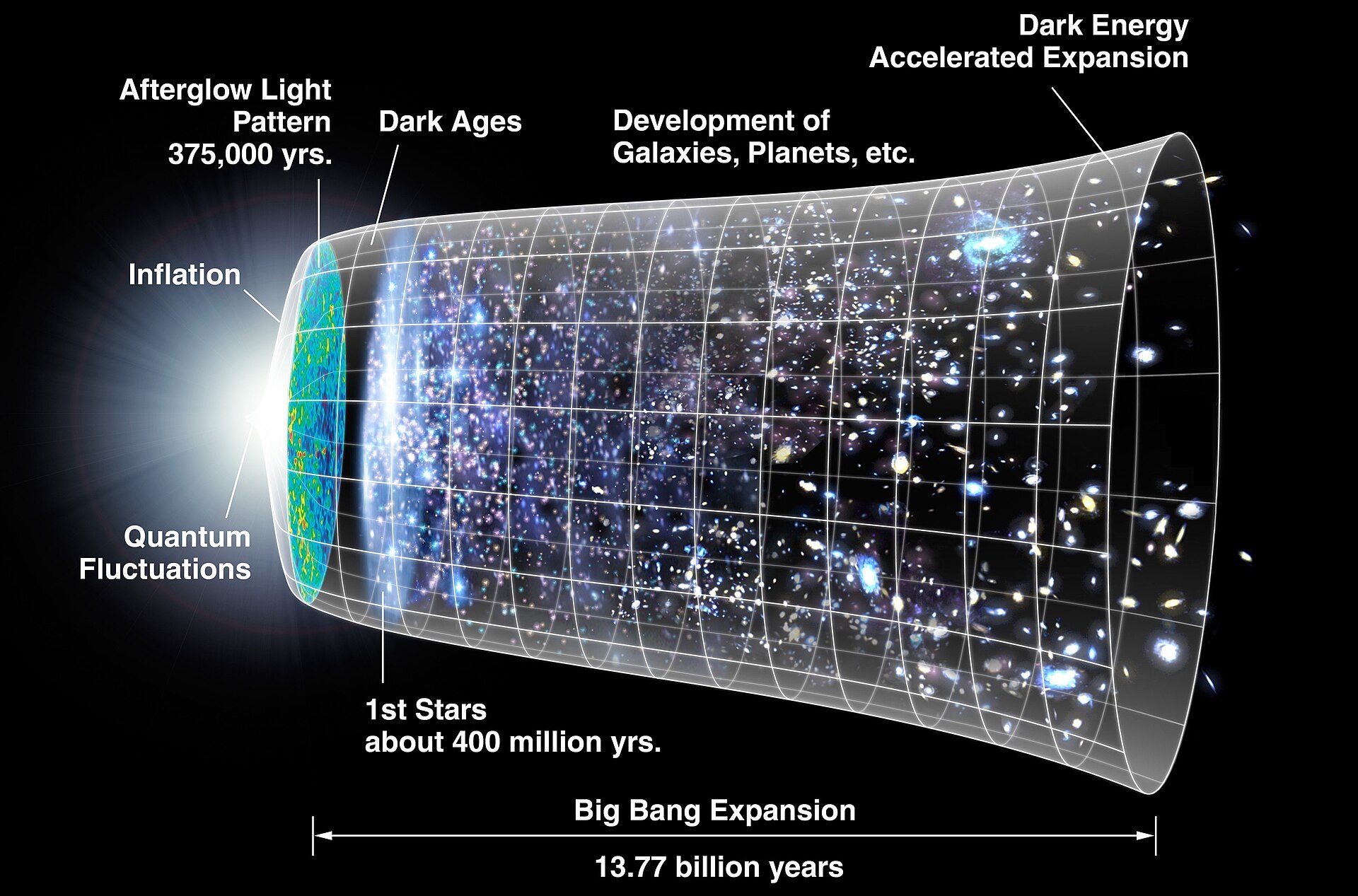
The first second contains stages separated by enormous time scales. Near the Planck time, around 10^-43 seconds, general relativity and quantum field theory are no longer sufficient on their own; there is still no confirmed theory of quantum gravity capable of describing that regime.
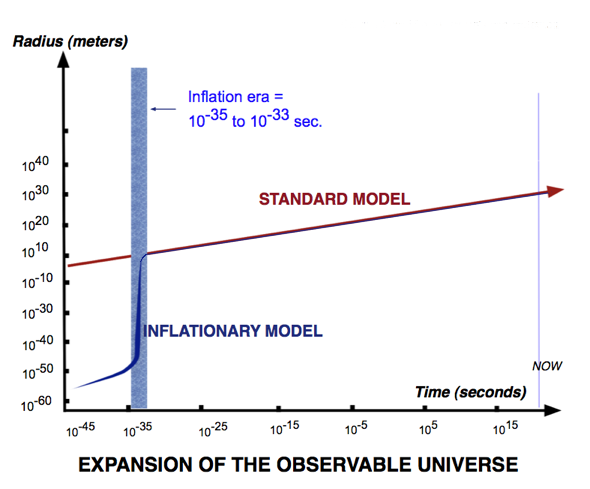
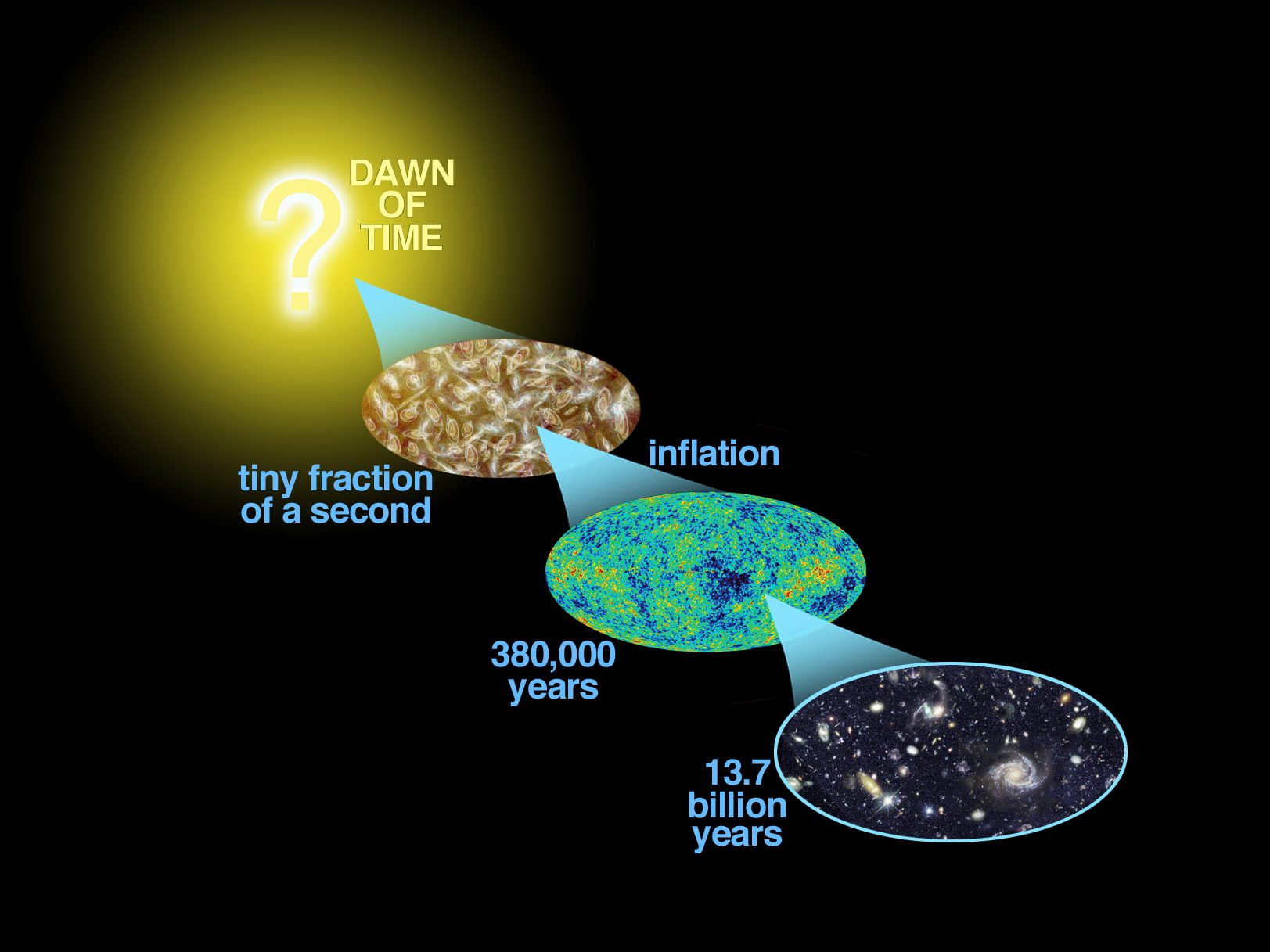
Many models then place a phase of cosmic inflation, approximately between 10^-36 and 10^-32 seconds, followed by reheating that would have transferred energy to particles and radiation. Inflation elegantly explains homogeneity, near spatial flatness, and the origin of small primordial perturbations, but its specific mechanism has not been directly identified.
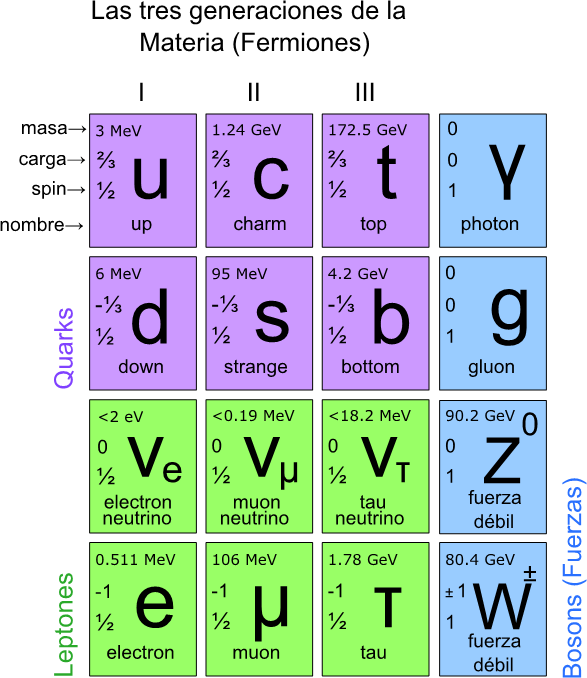
As cooling continued, electroweak symmetry breaking led to the distinct behavior of the electromagnetic and weak interactions. Later, during the first microseconds, the universe changed from a quark–gluon plasma into a hadronic medium: quarks became confined inside protons, neutrons, and other composite particles. Before one second had elapsed, a plasma of radiation, leptons, and baryons already existed, setting the stage for nucleosynthesis.
The asymmetry between matter and antimatter must have been generated at some early stage, but the responsible mechanism remains an open question. This interval therefore combines well-established physics—the Standard Model, the quark–gluon plasma, and thermal expansion—with hypotheses that remain unverified, such as a specific inflationary mechanism, quantum gravity, or baryogenesis.
Further reading: https://science.nasa.gov/universe/overview/ | https://home.cern/science/physics/early-universe | https://home.cern/science/physics/standard-model
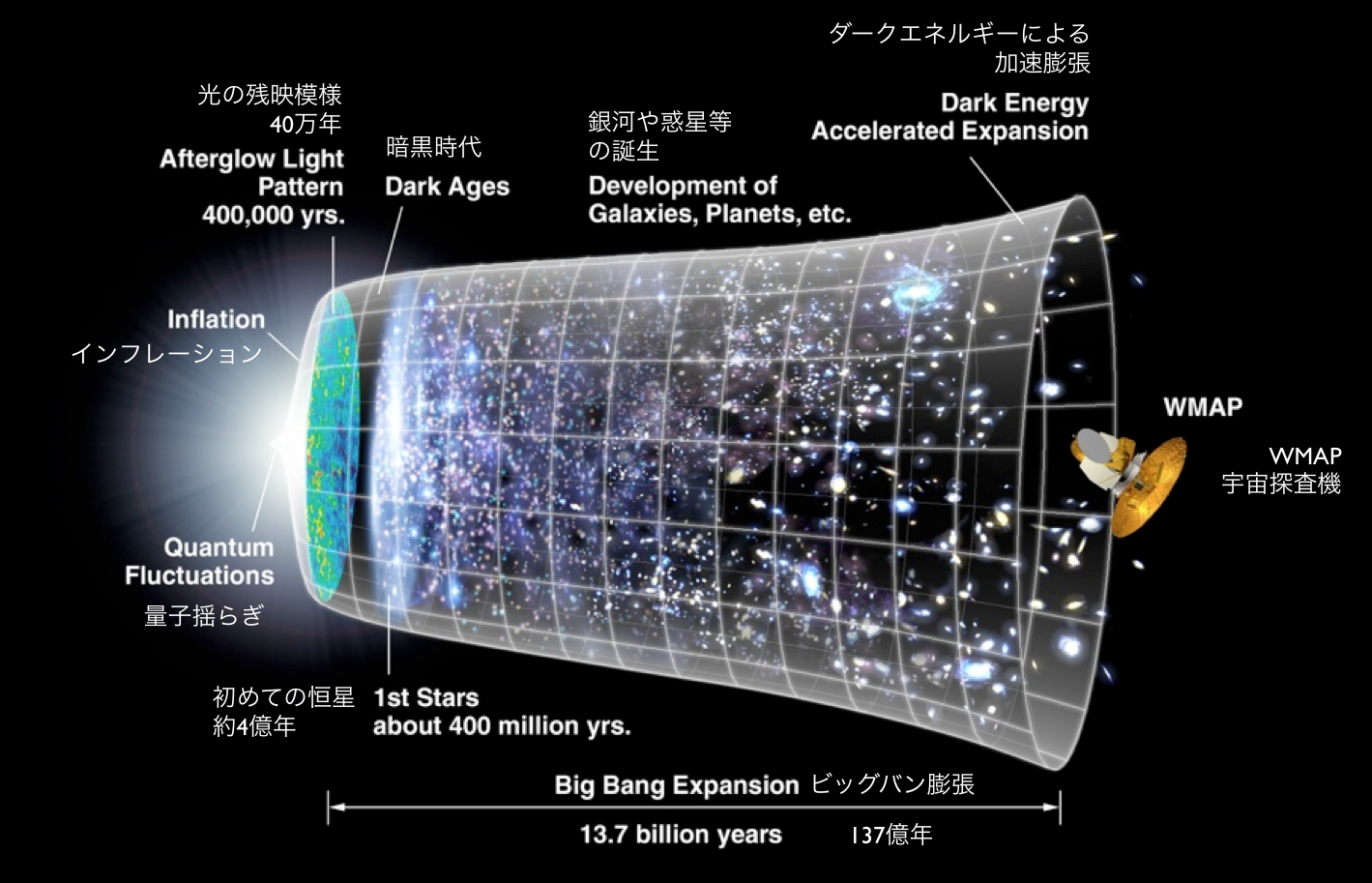
T + 1 s: neutrinos near decoupling
Around the first second, neutrinos gradually stop exchanging energy with the plasma often enough to remain in thermal equilibrium. Decoupling is not an instantaneous switch: it occurs when the expansion rate overtakes the rate of weak interactions.
From then on, primordial neutrinos evolve almost freely and form a cosmic background that has not yet been detected directly. Its presence is inferred from its effects on expansion, nucleosynthesis, and the cosmic microwave background.
Further reading: https://ccwww.kek.jp/pdg/2025/reviews/rpp2025-rev-bbang-nucleosynthesis.pdf
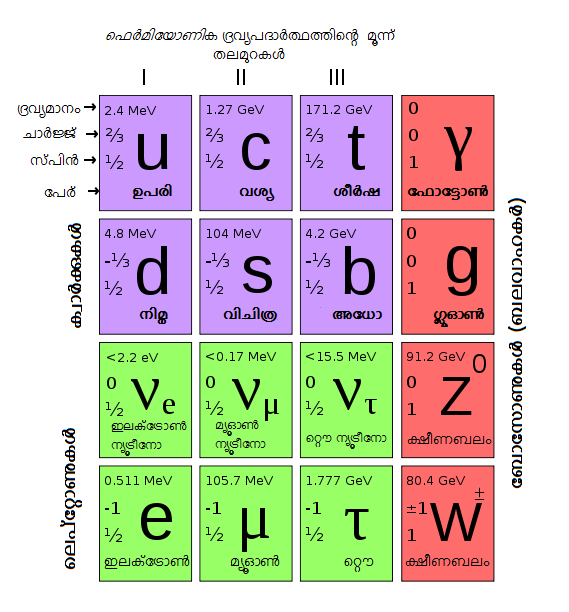
Weak-interaction freeze-out
Weak interactions convert neutrons into protons and protons into neutrons through processes involving electrons, positrons, and neutrinos. As the universe expands and cools, those reactions become too slow and the neutron-to-proton ratio departs from equilibrium.
The term “freeze-out” is used because expansion comes to dominate over the conversion reactions, not because the ratio becomes completely fixed. Free neutrons continue to decay, and the ratio keeps decreasing until many of the survivors become incorporated into helium-4 nuclei.
Further reading: https://ccwww.kek.jp/pdg/2025/reviews/rpp2025-rev-bbang-nucleosynthesis.pdf | https://arxiv.org/abs/2409.06015
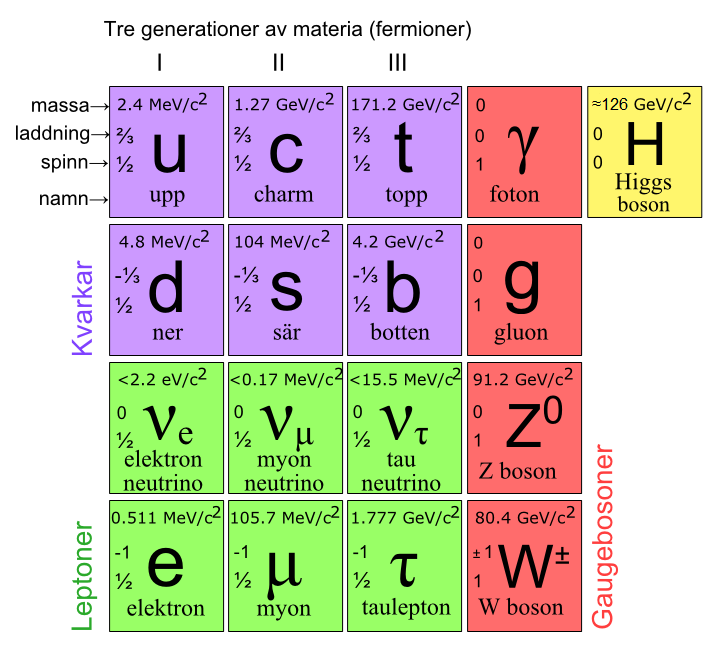
T + 2 s: declining neutron-to-proton ratio
Shortly after weak-interaction freeze-out, protons already clearly outnumber neutrons. The proportion continues to change because a free neutron is unstable and decays into a proton, an electron, and an electron antineutrino.
This decline matters on a cosmological scale: almost every neutron that survives until nucleosynthesis will eventually be bound inside helium-4. The neutron lifetime and the time that passes before deuterium can survive therefore directly influence the primordial abundance of helium.
Further reading: https://ccwww.kek.jp/pdg/2025/reviews/rpp2025-rev-bbang-nucleosynthesis.pdf
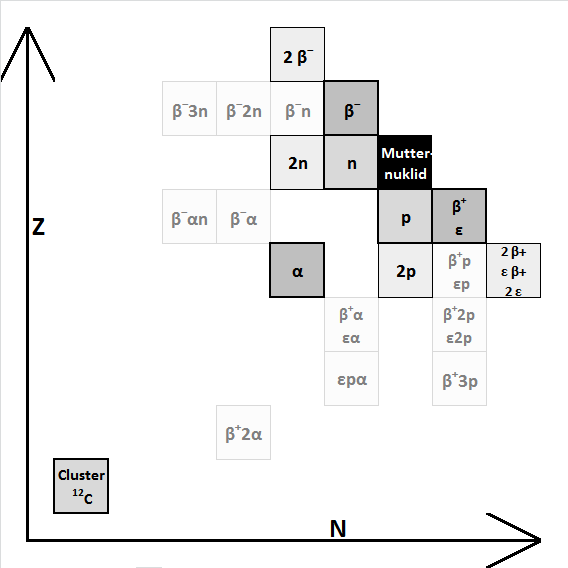
Electron–positron annihilation
When the temperature falls below the scale associated with the electron mass, the plasma can no longer produce electron–positron pairs as efficiently. Most of those pairs annihilate and transfer their energy mainly to the photon bath.
Not every electron disappears: a small excess remains to balance the positive charge of the protons. That remnant will become essential much later, when the universe cools enough for neutral atoms to form.
Further reading: https://ccwww.kek.jp/pdg/2025/reviews/rpp2025-rev-bbang-nucleosynthesis.pdf
Photons hotter than neutrinos
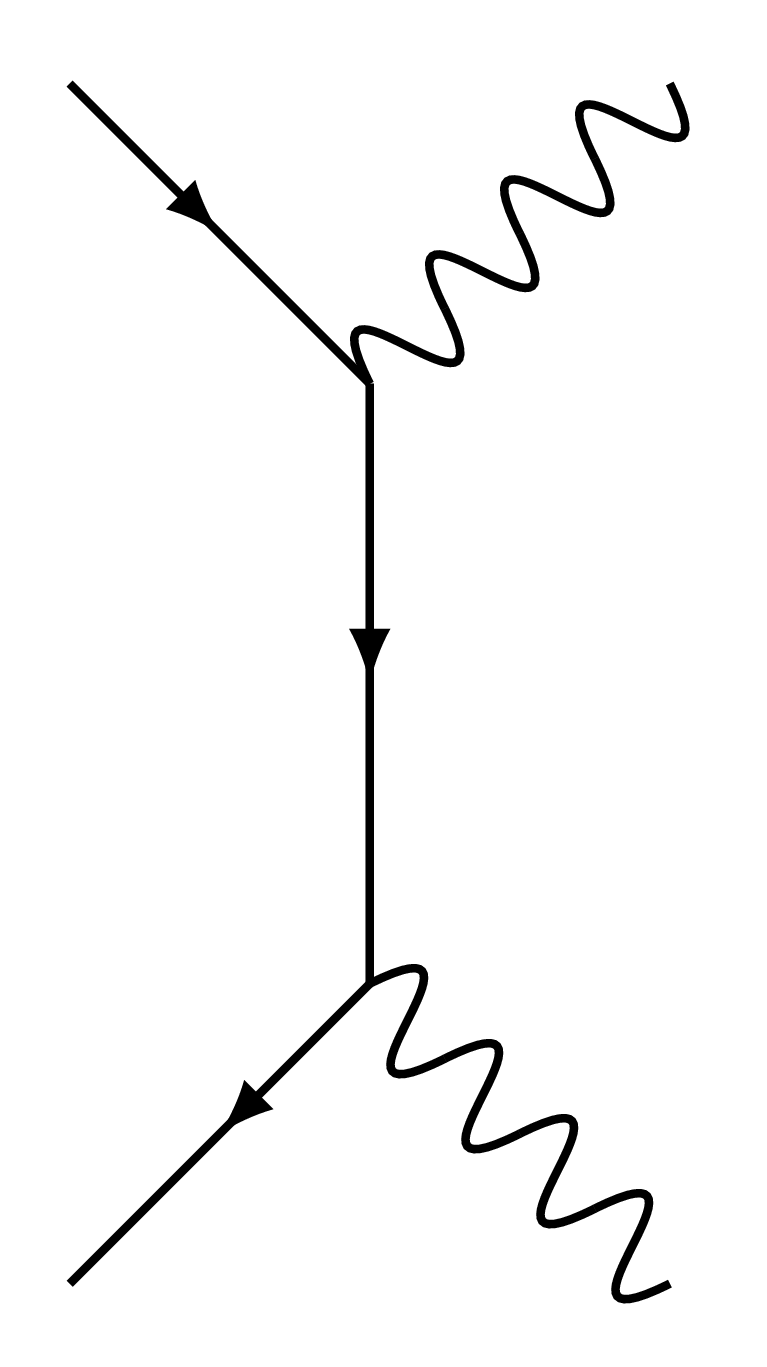
Neutrinos are already almost decoupled when electron–positron annihilation transfers energy to the electromagnetic plasma. As a result, photons become hotter than neutrinos. In the idealized treatment, the later temperature ratio is Tν/Tγ = (4/11)^(1/3), with small corrections because decoupling is not instantaneous.
This difference affects the radiation content of the early universe and is incorporated into the cosmological parameter N_eff, which is used to test the standard model against nucleosynthesis and the cosmic microwave background.
Further reading: https://ccwww.kek.jp/pdg/2025/reviews/rpp2025-rev-bbang-nucleosynthesis.pdf
T + 10 s: the deuterium bottleneck remains closed
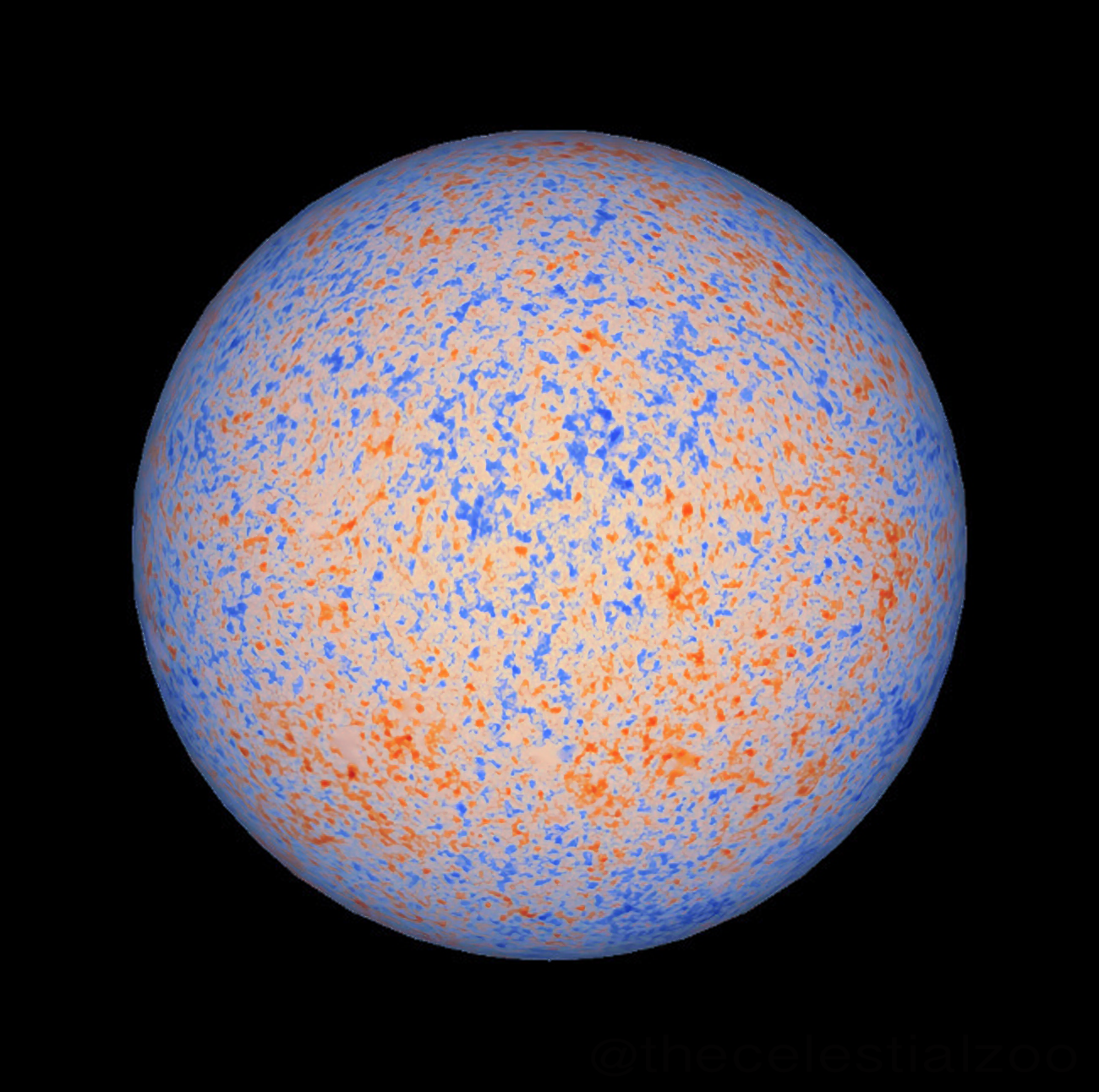
After ten seconds, protons and neutrons already exist, but the universe is still too hot for deuterium to accumulate efficiently. Although a proton and a neutron can bind together, the enormous number of photons per baryon means that there is always a high-energy tail of photons capable of breaking apart many newly formed deuterons.
This delay is known as the deuterium—or, more precisely, deuteron—bottleneck. Until it gives way, the reaction network cannot advance rapidly toward helium-3, tritium, and helium-4.
Further reading: https://arxiv.org/abs/2409.06015 | https://ccwww.kek.jp/pdg/2025/reviews/rpp2025-rev-bbang-nucleosynthesis.pdf
Ordinary matter is not yet atomic
No neutral atoms exist at this stage. The universe contains radiation, neutrinos, residual electrons and positrons, protons, neutrons, and, slightly later, light nuclei. The temperature is so high that any electron bound to a nucleus would be stripped away almost immediately.
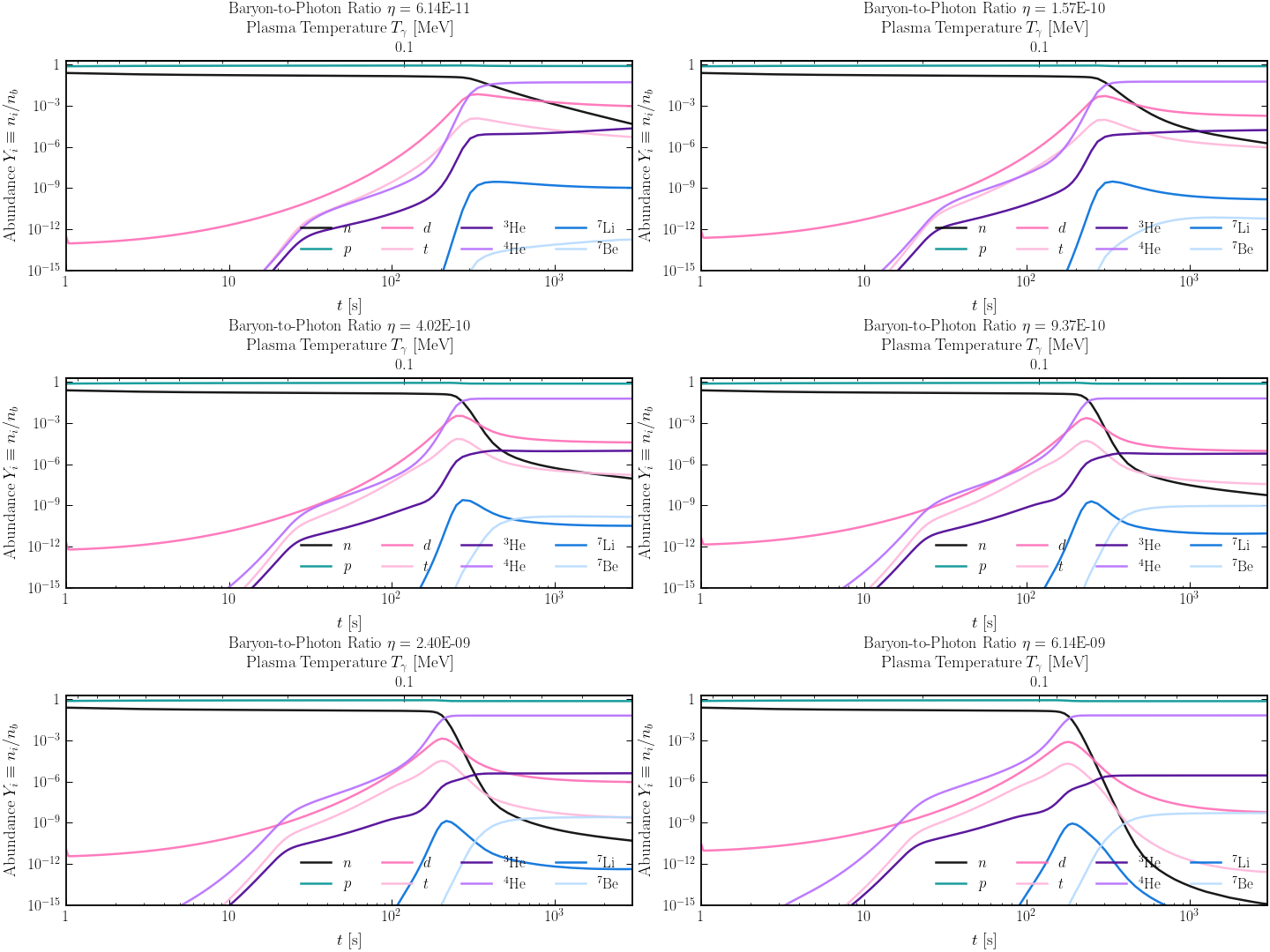
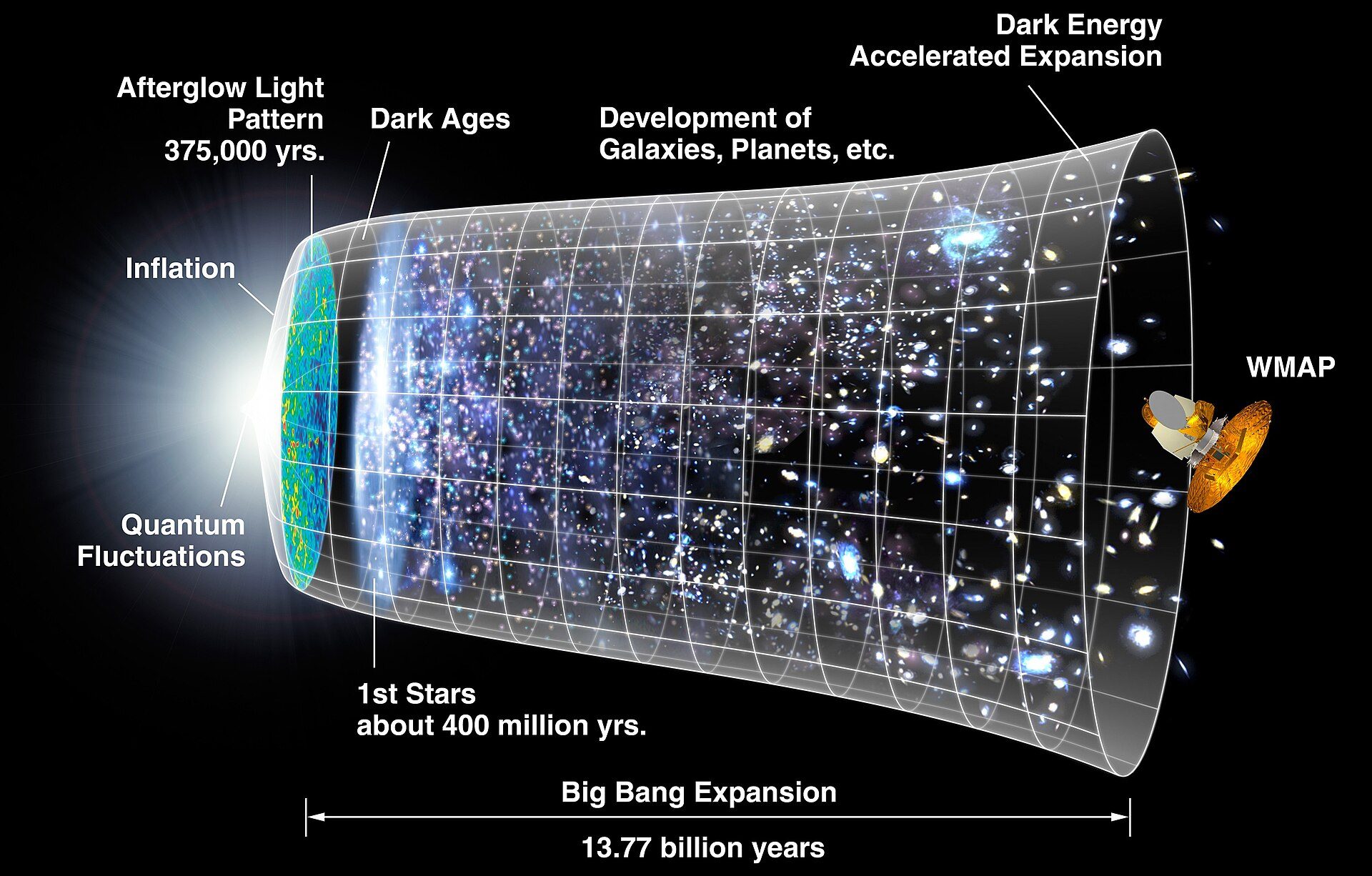
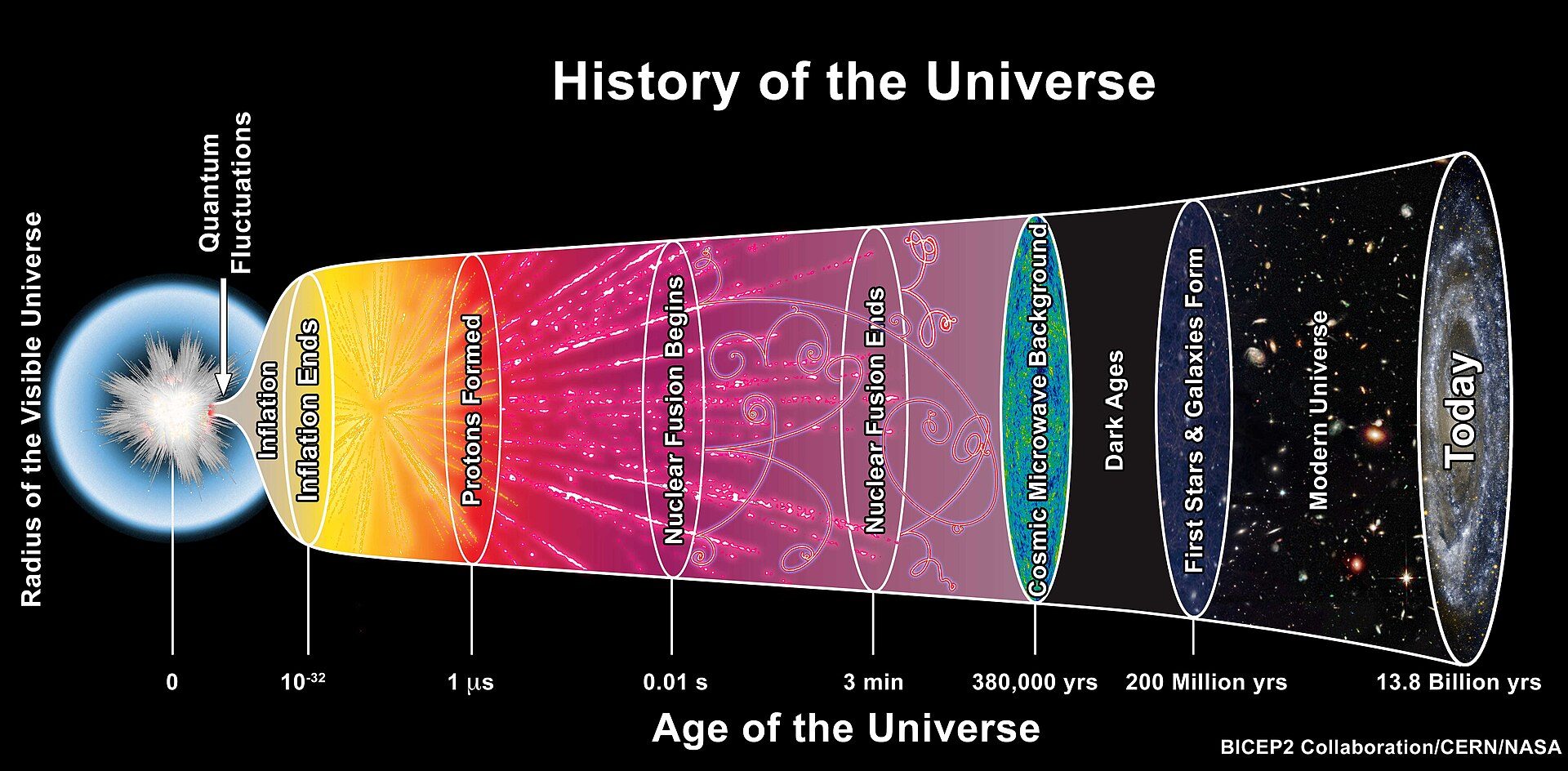
Atoms will appear about 380,000 years later, during recombination. The “elements” produced in the first minutes are therefore atomic nuclei, not complete atoms.
Further reading: https://www.esa.int/Science_Exploration/Space_Science/Planck/Planck_and_the_cosmic_microwave_background
The clock of free neutrons
While deuterium cannot accumulate, free neutrons continue to decay. Their lifetime is long compared with a few seconds, but not compared with the waiting period before efficient nucleosynthesis begins. Every neutron lost slightly reduces the amount of helium-4 that can form.
The primordial helium abundance therefore acts as a combined clock: it depends on the expansion rate, weak interactions, and the neutron lifetime.
Further reading: https://ccwww.kek.jp/pdg/2025/reviews/rpp2025-rev-bbang-nucleosynthesis.pdf
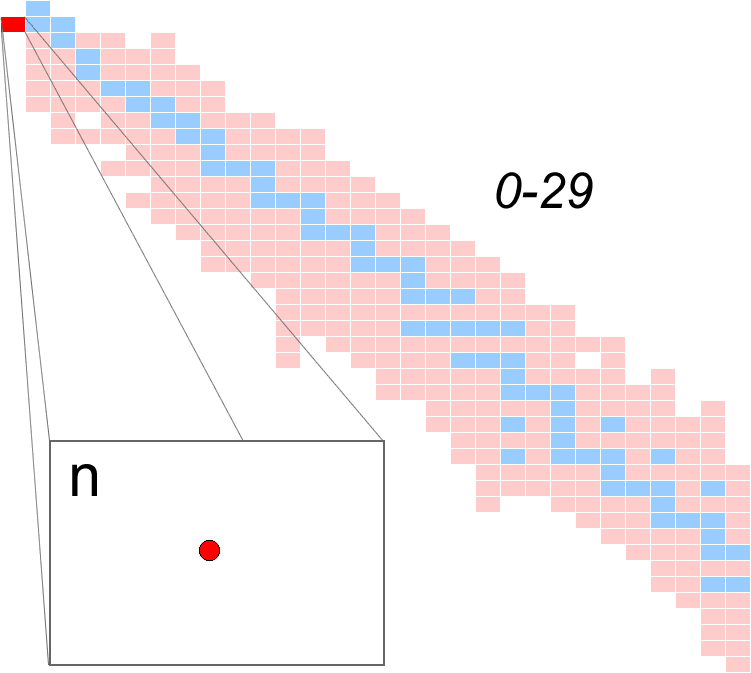
T + 20 s: continuing expansion and cooling
At twenty seconds, the universe is still radiation-dominated. Expansion lowers the temperature and density, changing the balance between reactions that form nuclei and those that destroy them.
At this stage, it is not enough to ask whether a reaction is possible. Its rate must also be compared with the expansion rate: a reaction that is too slow becomes cosmologically “frozen out,” even if nuclear physics allows it.
Further reading: https://arxiv.org/abs/2409.06015
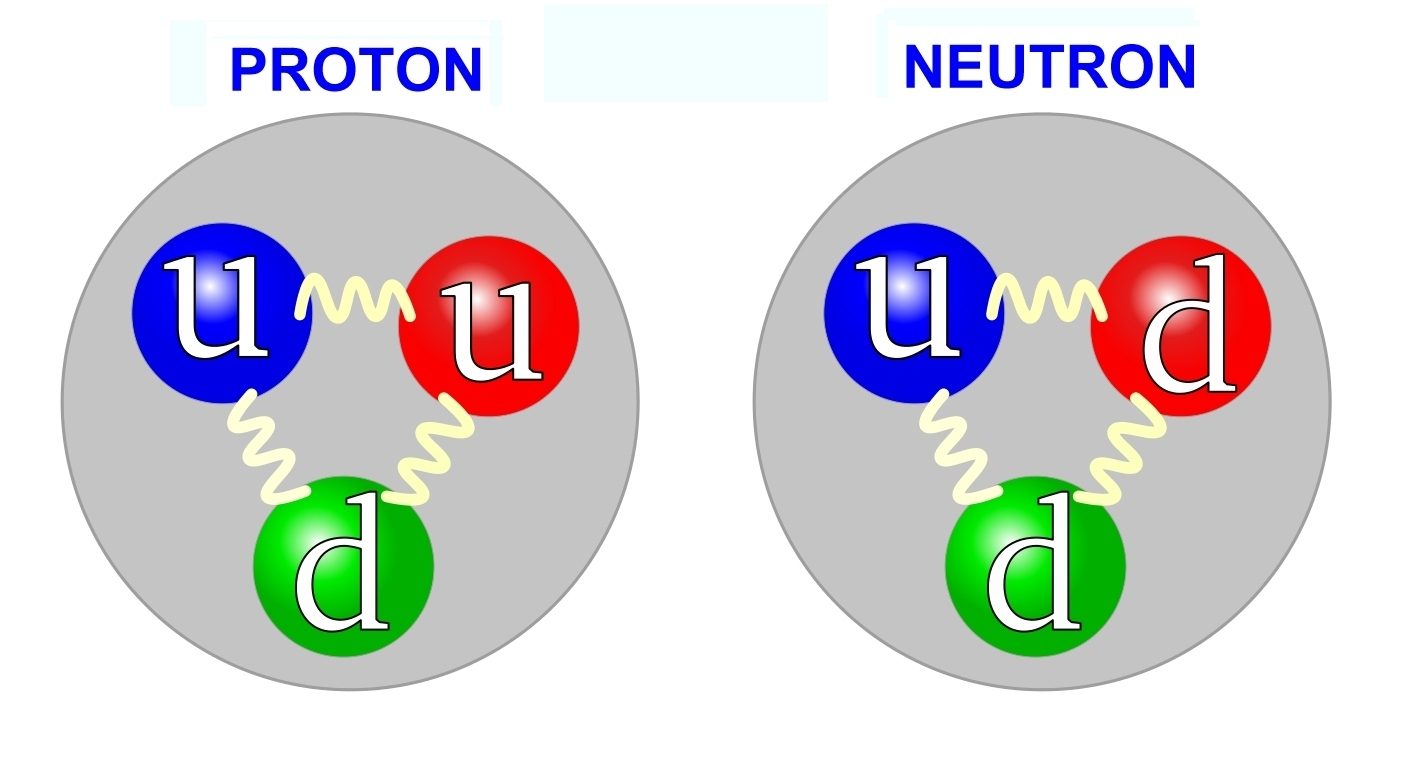
T + 30 s: protons as the baryonic majority
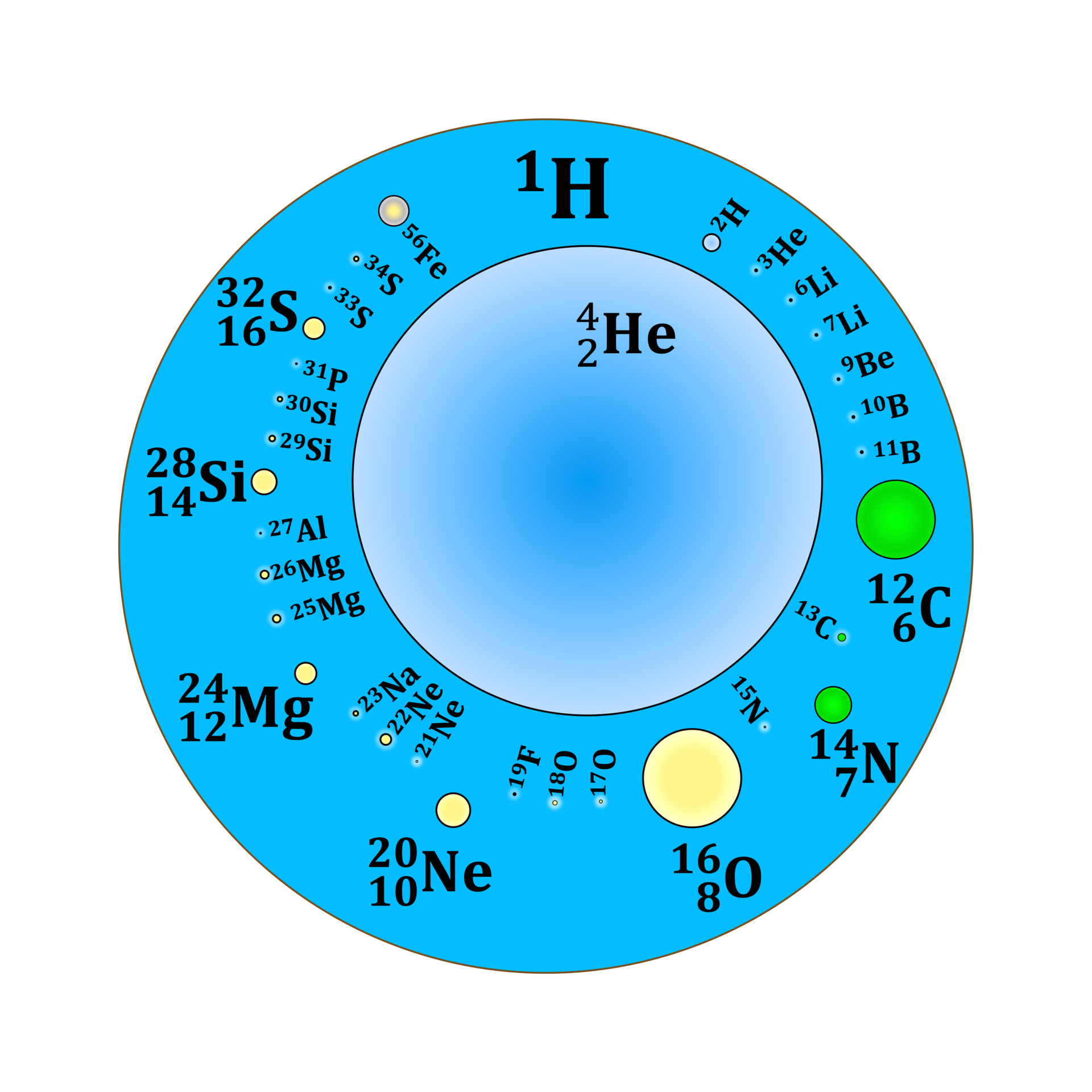
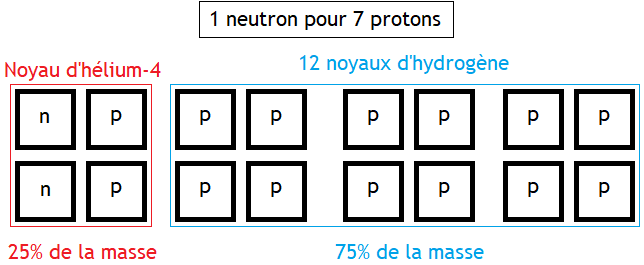
Protons already make up the majority of the surviving baryons. Neutrons are less numerous, but they play a decisive role because they make it possible to build deuterium and helium. The ratio between the two already points toward most baryonic mass remaining as hydrogen and close to one quarter becoming helium-4.
That figure is not inserted by hand: it emerges from the neutron-to-proton ratio, cosmic expansion, and the network of nuclear reactions.
Further reading: https://ccwww.kek.jp/pdg/2025/reviews/rpp2025-rev-bbang-nucleosynthesis.pdf
T + 40 s: conditions before efficient nucleosynthesis
The temperature continues to fall, but deuterium remains fragile in the radiation field. The difficulty does not depend only on whether the average thermal energy is above or below its binding energy: because there are roughly billions of photons for every baryon, the energetic tail of the spectrum can continue to photodisintegrate it.
This enormous imbalance between photons and matter explains why efficient nucleosynthesis is delayed until temperatures far below the binding energy of the deuteron.
Further reading: https://arxiv.org/abs/2409.06015
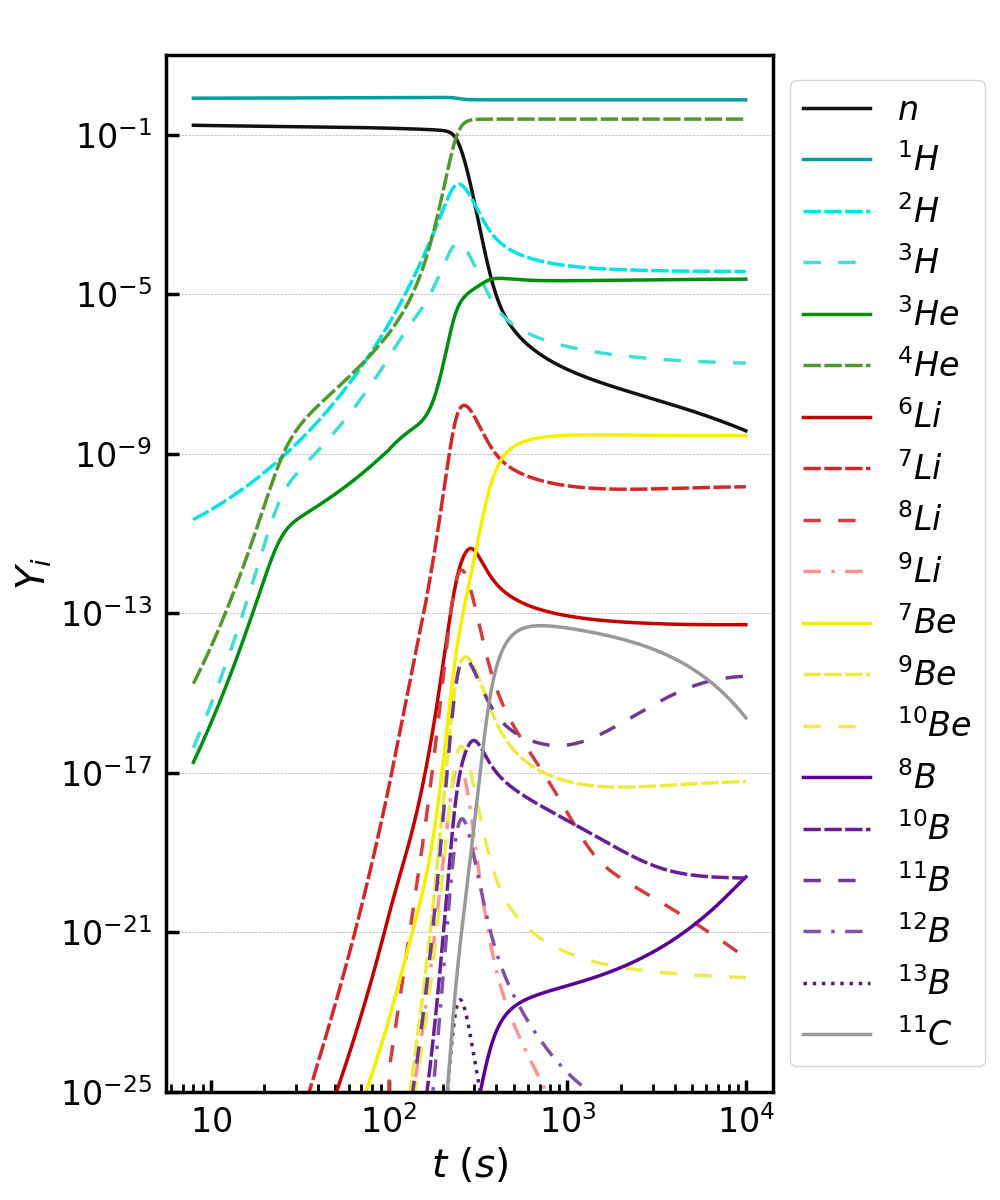
T + 50 s: reactions possible, accumulation difficult
As the first minute approaches, some nuclear reactions produce deuterium and other light nuclei, but a large population still cannot be maintained. Photodisintegration and expansion compete with their formation.
The system is approaching a rapid transition: when enough deuterium begins to survive, it will cease to be a bottleneck and will feed several pathways toward helium.
Further reading: https://ccwww.kek.jp/pdg/2025/reviews/rpp2025-rev-bbang-nucleosynthesis.pdf | https://arxiv.org/abs/2409.06015
T + 1 min: the deuterium barrier begins to give way
Around the first minute, the deuterium bottleneck begins to weaken, but there is no universal second at which it suddenly opens. The exact timing depends on baryon density, expansion, and reaction rates.
The physical idea is that the temperature and the high-energy photon tail have fallen enough for a growing fraction of deuterium to avoid immediate destruction. Intense nucleosynthesis will unfold during the following minutes.
Further reading: https://arxiv.org/abs/2409.06015 | https://ccwww.kek.jp/pdg/2025/reviews/rpp2025-rev-bbang-nucleosynthesis.pdf
T + 1 min 20 s: deuterium begins to survive
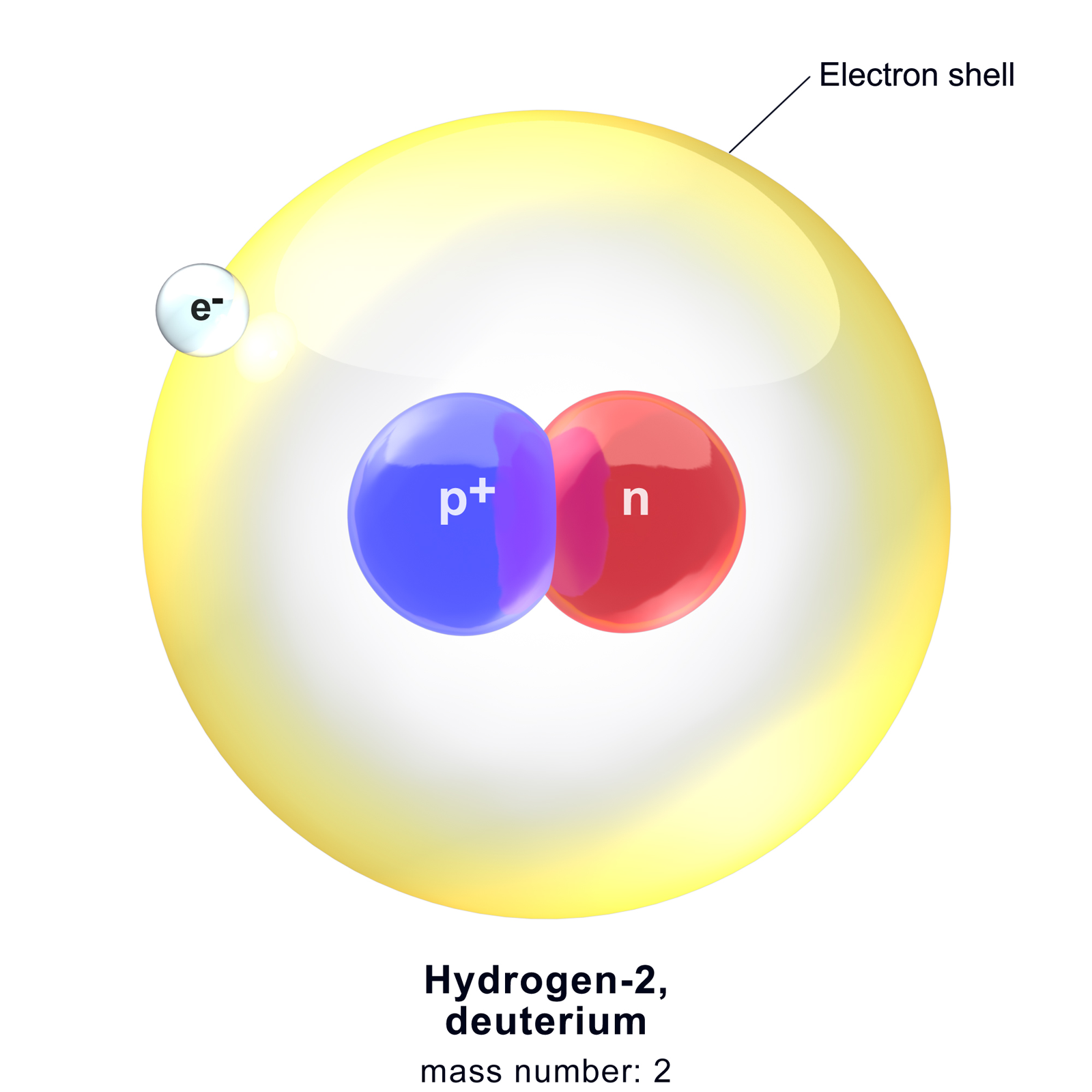
Around one or two minutes after the beginning of the hot expansion, deuterium can accumulate in appreciable amounts. Each deuteron contains one proton and one neutron and acts as the gateway to almost the entire network of primordial nucleosynthesis.
Once the bottleneck has been overcome, deuterium reacts with protons, neutrons, and other deuterons. Its survival therefore marks the transition from a waiting period dominated by photodisintegration to a short phase of rapid nuclear production.
Further reading: https://arxiv.org/abs/2409.06015
Rapid nucleosynthesis: deuterium toward helium
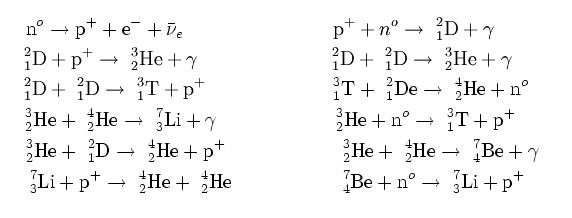
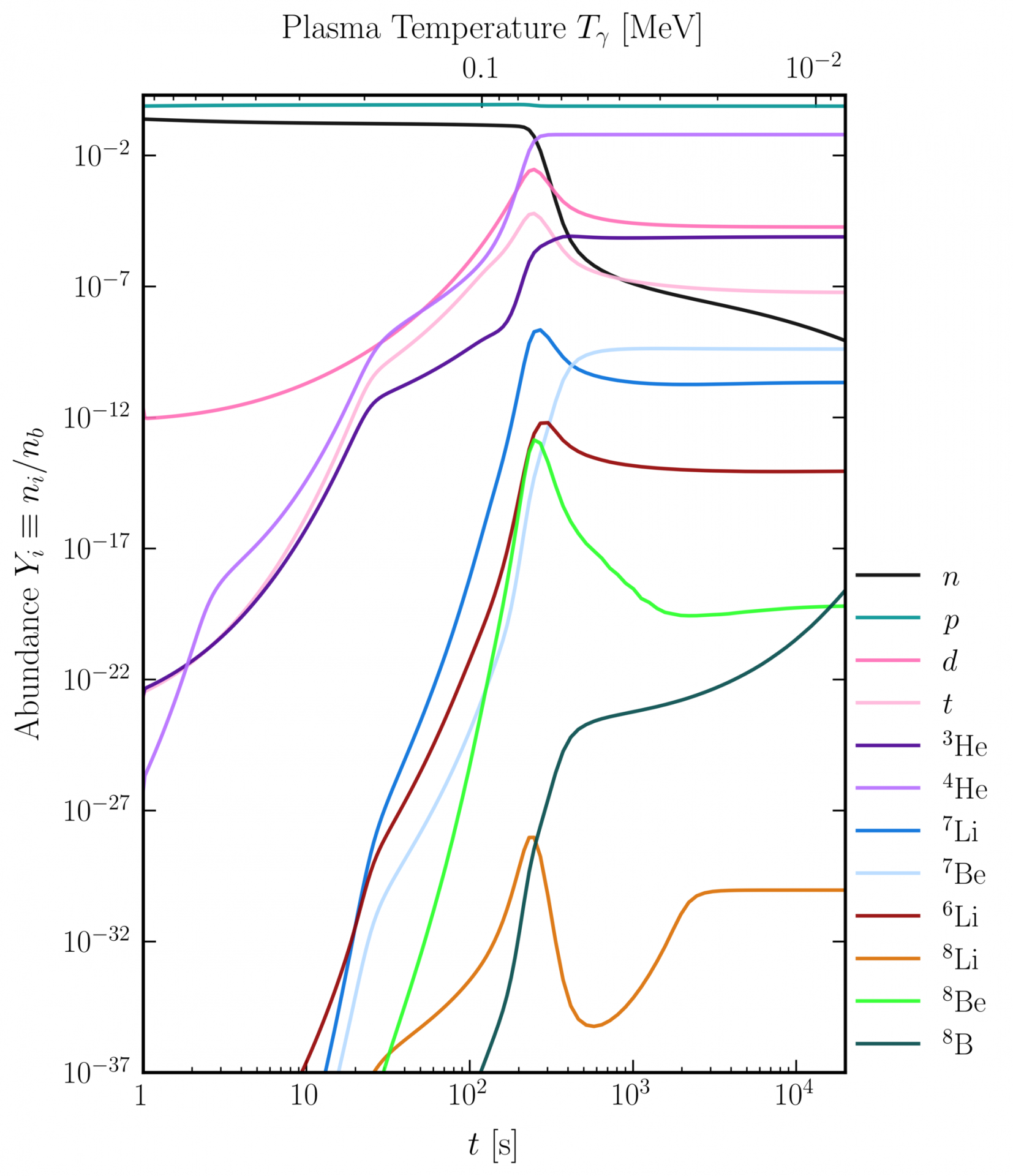
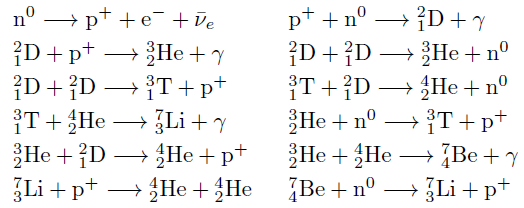
Between approximately the first minute and the following several minutes, the nuclear network rapidly converts part of the deuterium into helium-3, tritium, and, above all, helium-4. The process does not occur through a single reaction, but through a network of captures and exchanges among light nuclei.
This phase is brief because the universe continually expands and cools. Primordial nucleosynthesis continues beyond the three-minute mark, but most helium production is concentrated in the first few minutes.
Further reading: https://arxiv.org/abs/2409.06015 | https://ccwww.kek.jp/pdg/2025/reviews/rpp2025-rev-bbang-nucleosynthesis.pdf
T + 1 min 30 s: pathways to tritium and helium-3
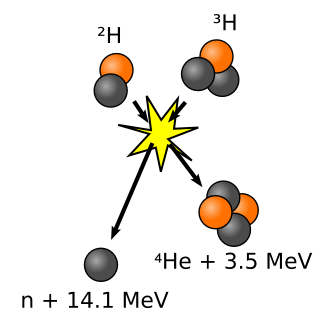
The surviving deuterium makes it possible to form mass-three nuclei. Reactions between deuterons, or between deuterium and nucleons, mainly produce tritium and helium-3, which act as intermediaries in the network.
Most of those nuclei will not remain as abundant final products: further reactions carry them toward the much more stable helium-4. The small residual quantities of helium-3 are nevertheless also a prediction of the model.
Further reading: https://ccwww.kek.jp/pdg/2025/reviews/rpp2025-rev-bbang-nucleosynthesis.pdf

T + 1 min 40 s: helium-4, the major early product
Helium-4 is the major product of primordial nucleosynthesis because its nucleus, made of two protons and two neutrons, is tightly bound. Once the nuclear network becomes active, almost every neutron that has survived is incorporated into helium-4.
The result is a helium fraction close to 25% of the mass of ordinary matter, while the number of nuclei remains dominated by protons that will later form hydrogen.
Further reading: https://ccwww.kek.jp/pdg/2025/reviews/rpp2025-rev-bbang-nucleosynthesis.pdf | https://science.nasa.gov/universe/overview/
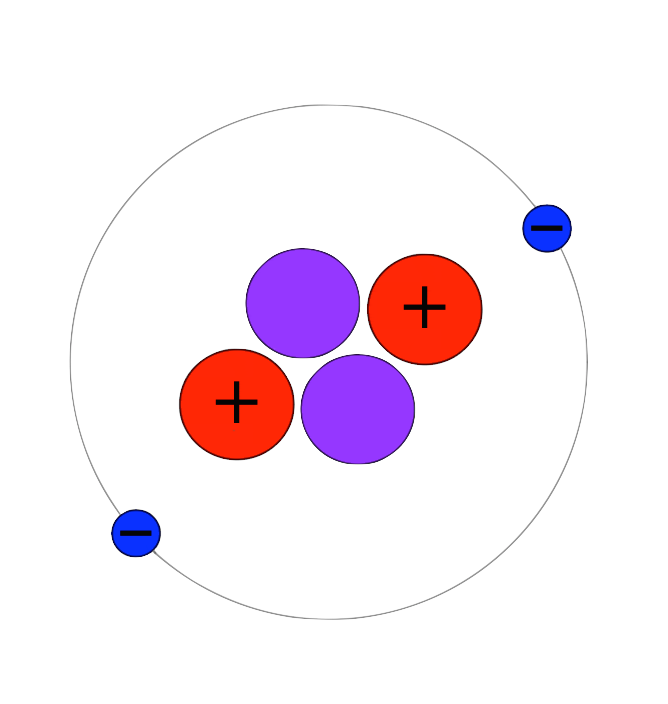
The mass-5 gap
Primordial nucleosynthesis produces almost no heavy elements because there are no stable nuclei with mass 5, nor with mass 8. These gaps interrupt the simple successive-capture pathways that might otherwise lead from helium to much heavier nuclei.
In addition, the density falls rapidly and there is not enough time for processes such as the triple-alpha reaction—which does produce carbon in stars—to operate efficiently. The early universe therefore produces mainly hydrogen and helium, with traces of other light nuclei.
Further reading: https://arxiv.org/abs/2409.06015
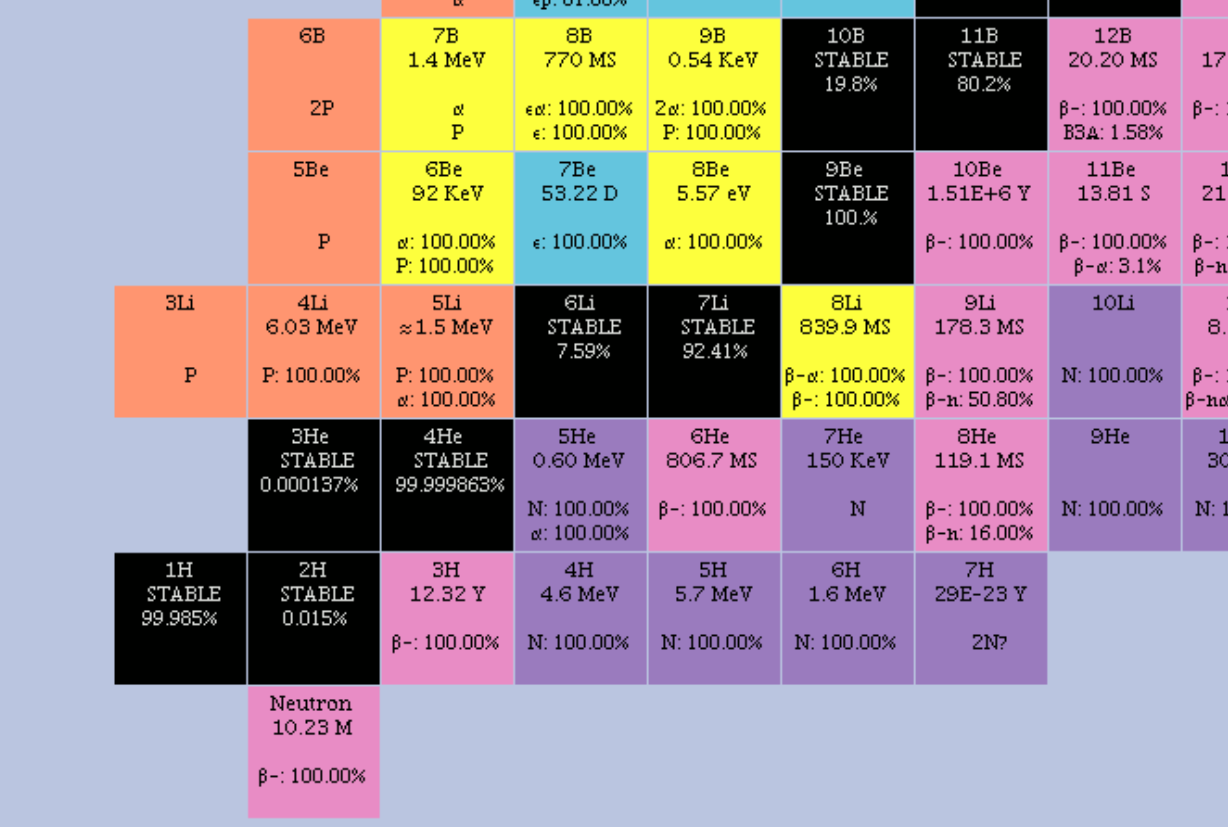
Traces of lithium and beryllium
The primordial network produces very small amounts of lithium-7 and beryllium-7. A substantial part of the predicted lithium-7 initially forms as beryllium-7, which can much later turn into lithium through electron capture.
These traces are scientifically valuable because they depend on several nuclear reaction rates. They also create the main discrepancy in the standard model: the amount of lithium observed in some ancient stars is lower than the calculated value.
Further reading: https://ccwww.kek.jp/pdg/2025/reviews/rpp2025-rev-bbang-nucleosynthesis.pdf | https://arxiv.org/abs/2401.15054
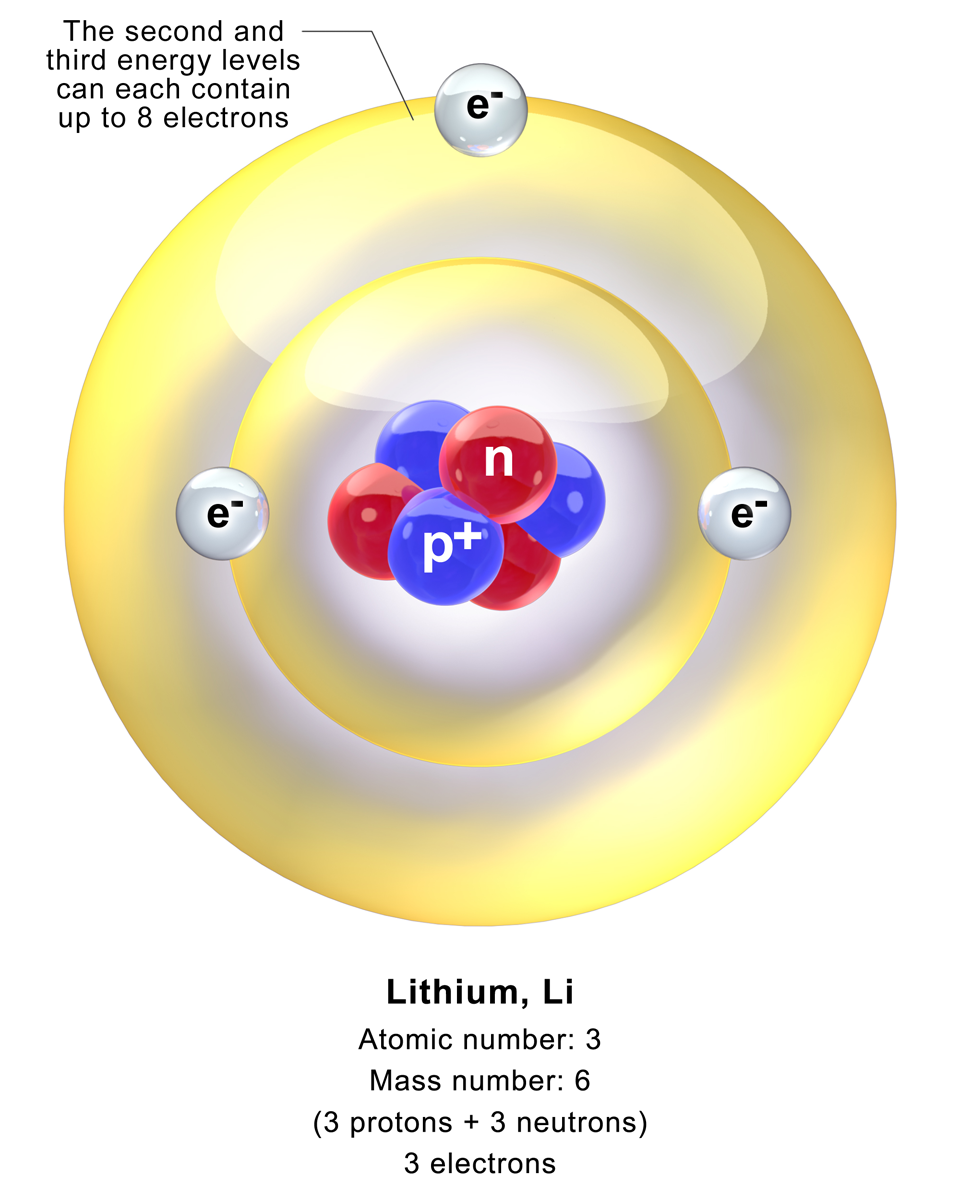
T + 2 min 10 s: helium under construction
By around two minutes, a growing fraction of the surviving neutrons is locked inside helium-4. The network consumes deuterium and mass-three nuclei, and the composition gradually approaches its primordial outcome.
The universe is still a plasma: “helium” here means bare helium nuclei. Electrons will not bind to them until hundreds of thousands of years later.
Further reading: https://ccwww.kek.jp/pdg/2025/reviews/rpp2025-rev-bbang-nucleosynthesis.pdf
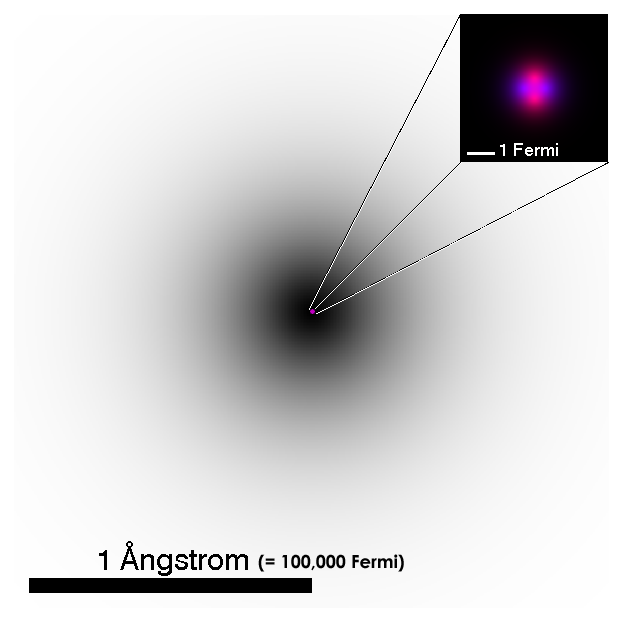
Residual deuterium: a probe of baryon density
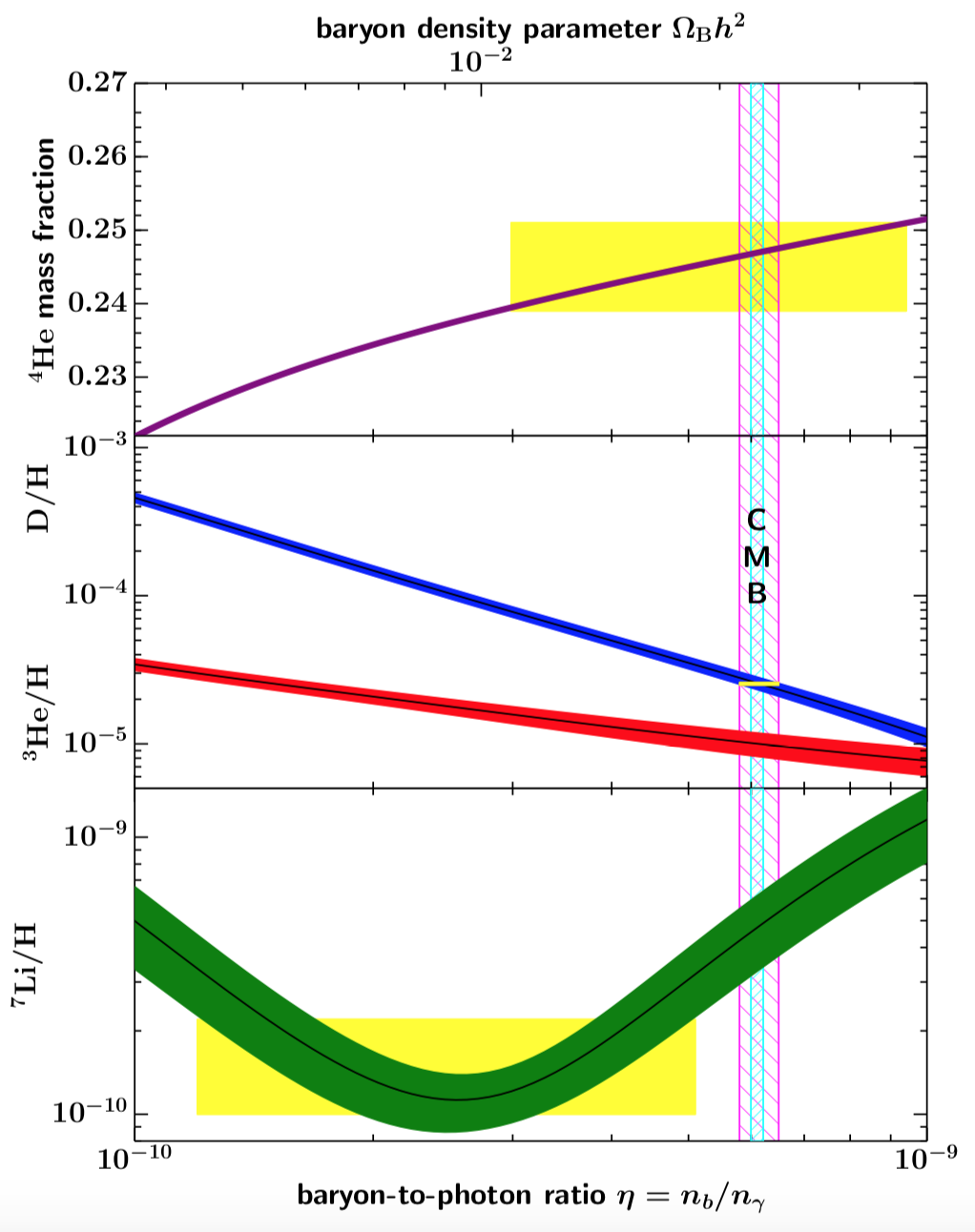
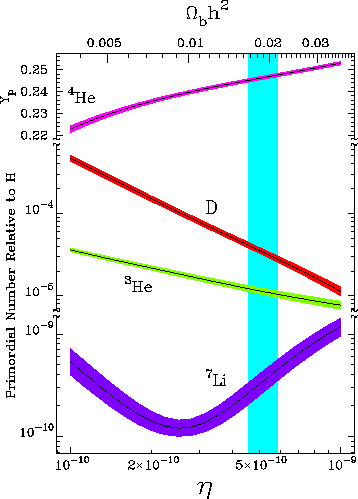
The deuterium that is not burned into helium remains as a primordial residue. Its abundance is especially sensitive to baryon density: the greater the density, the more efficiently reactions consume deuterium and the smaller the final amount.
The deuterium-to-hydrogen ratio observed in very old gas can therefore be used to estimate the density of ordinary matter in the universe and compare it with the value inferred from the cosmic microwave background.
Further reading: https://arxiv.org/abs/2401.15054 | https://ccwww.kek.jp/pdg/2025/reviews/rpp2025-rev-bbang-nucleosynthesis.pdf
The nuclear window begins to close
Nucleosynthesis does not end because protons run out, but because expansion cools and dilutes the plasma. Useful collisions become less frequent, and charged-particle reactions find it increasingly difficult to overcome their electrical barriers.
The nuclear window closes gradually. Some reactions continue for several more minutes, but the main abundances change less and less.
Further reading: https://arxiv.org/abs/2409.06015
Radiation, nuclei, and free electrons
Shortly before the three-minute mark, the universe contains photons, decoupled neutrinos, free electrons, protons, and light nuclei. There are no neutral atoms, molecules, minerals, or astronomical structures.
Radiation still dominates the overall dynamics. Ordinary matter already has a basic nuclear composition, but hundreds of thousands of years will pass before electrons form atoms, and hundreds of millions before the first stars appear.
Further reading: https://science.nasa.gov/universe/overview/ | https://www.esa.int/Science_Exploration/Space_Science/Planck/Planck_and_the_cosmic_microwave_background
Agreement between nuclear physics and cosmology
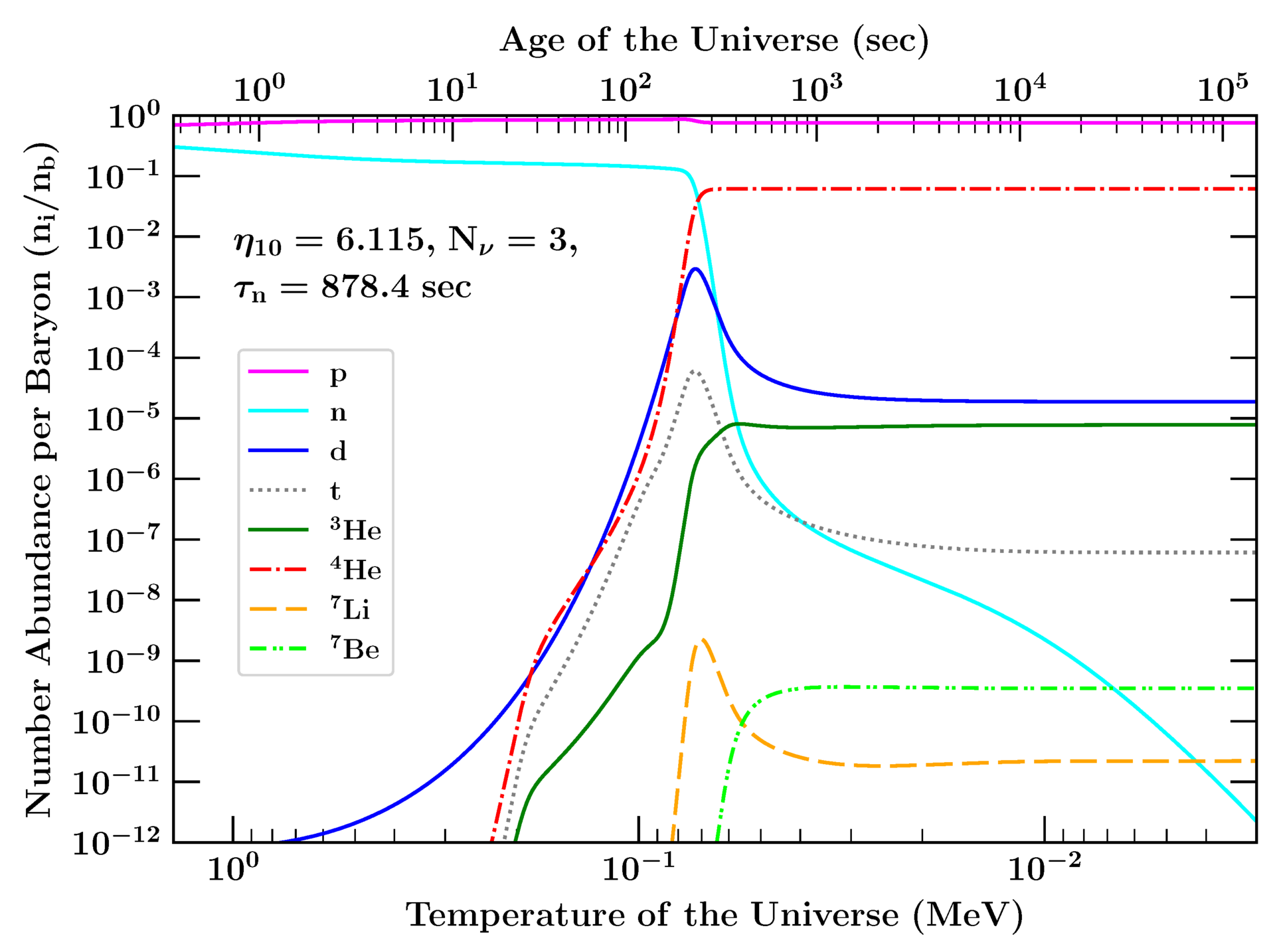
Primordial nucleosynthesis connects laboratory nuclear physics with cosmology. Reaction rates, the neutron lifetime, and weak interactions combine with the expansion rate to predict deuterium, helium-3, helium-4, and lithium-7.
The broad agreement between these predictions and observations makes nucleosynthesis one of the earliest tests of the hot Big Bang model. It also constrains additional particles or forms of energy that would have altered the expansion rate.
Further reading: https://arxiv.org/abs/2409.06015 | https://arxiv.org/abs/2401.15054
What does not yet exist
Before three minutes have passed, there are no stars, planets, galaxies, molecules, or neutral atoms. Nor are there meaningful amounts of carbon, oxygen, silicon, or iron: those elements will require later generations of stars and stellar explosions.
What has been established is the nuclear raw material of the cosmos: protons, helium-4, and traces of deuterium, helium-3, and lithium-7. Chemical complexity will come later.
Further reading: https://science.nasa.gov/universe/overview/
T + 3 min: a provisional physical snapshot
Around the three-minute mark, the universe already has a recognizable nuclear composition: a predominance of protons—the future nuclei of hydrogen—a helium-4 fraction close to 25% by mass, and traces of deuterium, helium-3, and lithium-7.
This “snapshot” is provisional. Nucleosynthesis does not stop exactly at 180 seconds, and some abundances continue to adjust during the following minutes. Three minutes is a useful narrative reference, not a rigid physical boundary.
Further reading: https://ccwww.kek.jp/pdg/2025/reviews/rpp2025-rev-bbang-nucleosynthesis.pdf | https://arxiv.org/abs/2409.06015
After three minutes: nucleosynthesis continues
Primordial nucleosynthesis continues after the three-minute mark and is generally described as a process extending over several minutes, until expansion and cooling render the reactions ineffective. The essential outcome, however, is already taking shape: most of the surviving neutrons have been incorporated into helium-4.
A timeline focused on the first three minutes must therefore explain that its endpoint is educational. It does not imply that every nuclear reaction stops at that exact instant.
Further reading: https://arxiv.org/abs/2409.06015
The cosmic microwave background as a later test
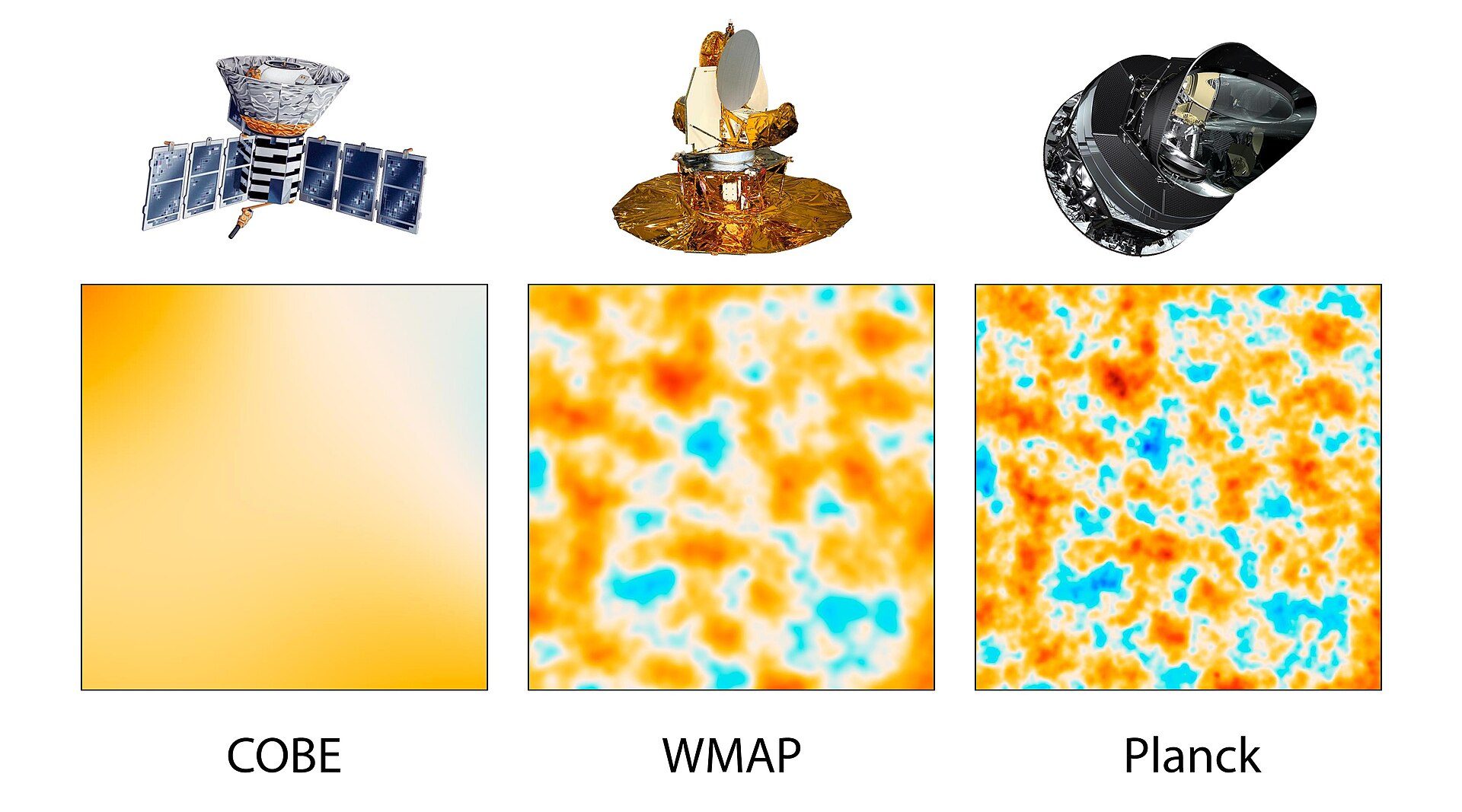
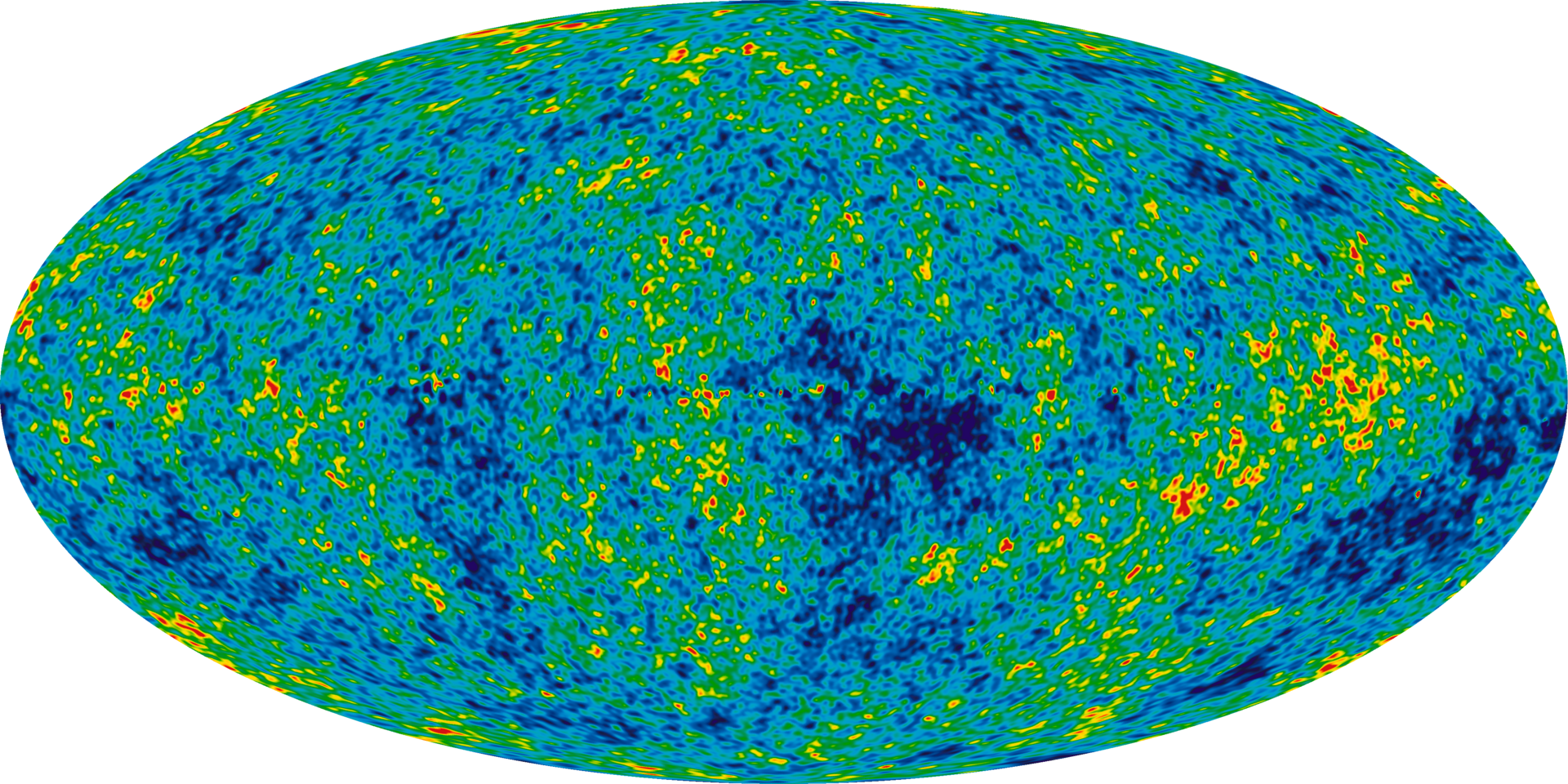
The cosmic microwave background is released much later, when the universe is about 380,000 years old and becomes transparent to light. It is not an image of the first three minutes, but it preserves information about baryon density, geometry, and primordial perturbations.
The density of ordinary matter inferred from the cosmic microwave background can be fed into nucleosynthesis calculations. Its agreement with observed deuterium and helium provides an independent test of the early thermal history.
Further reading: https://www.esa.int/Science_Exploration/Space_Science/Planck/Planck_and_the_cosmic_microwave_background
Deuterium observed in ancient gas
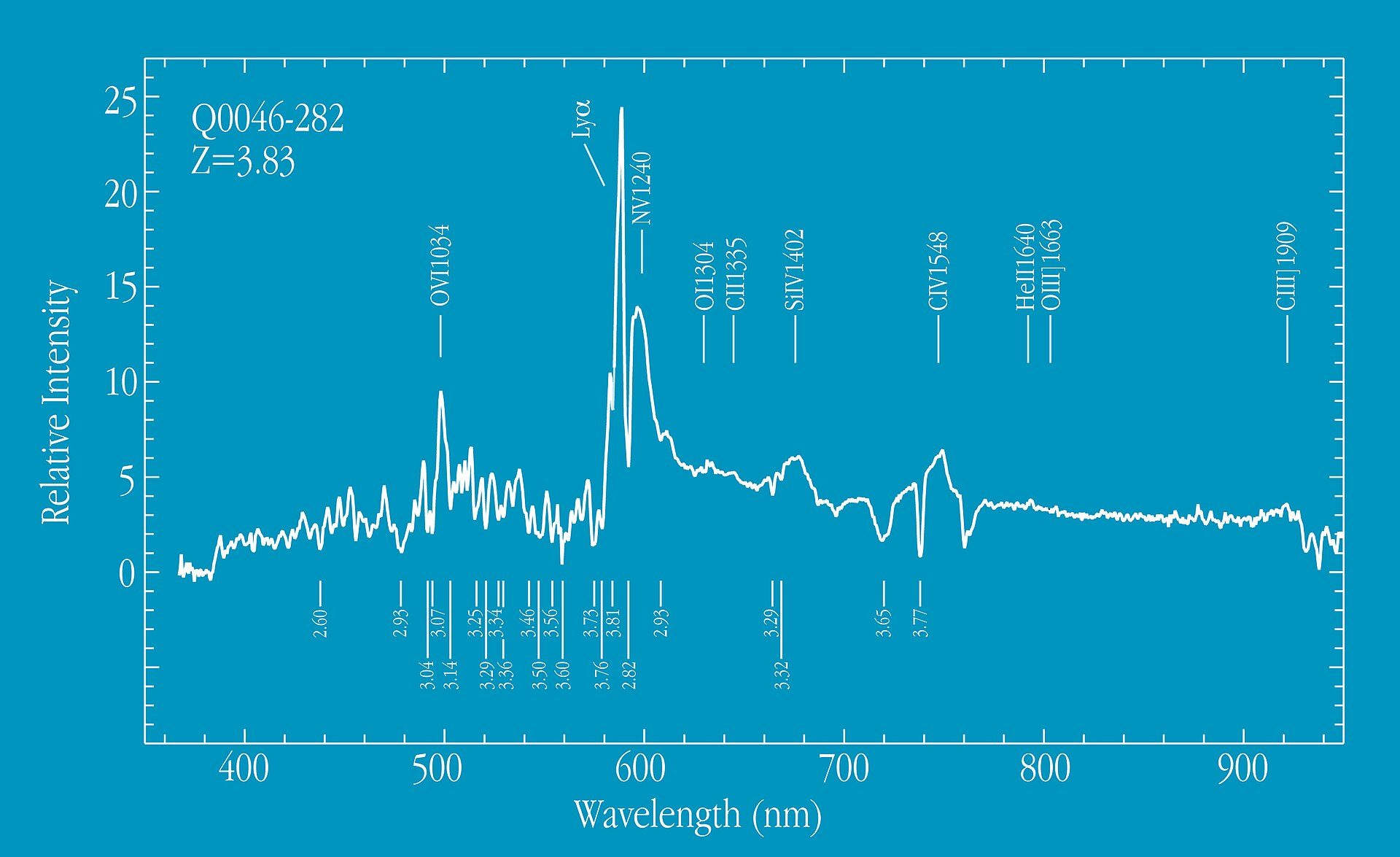
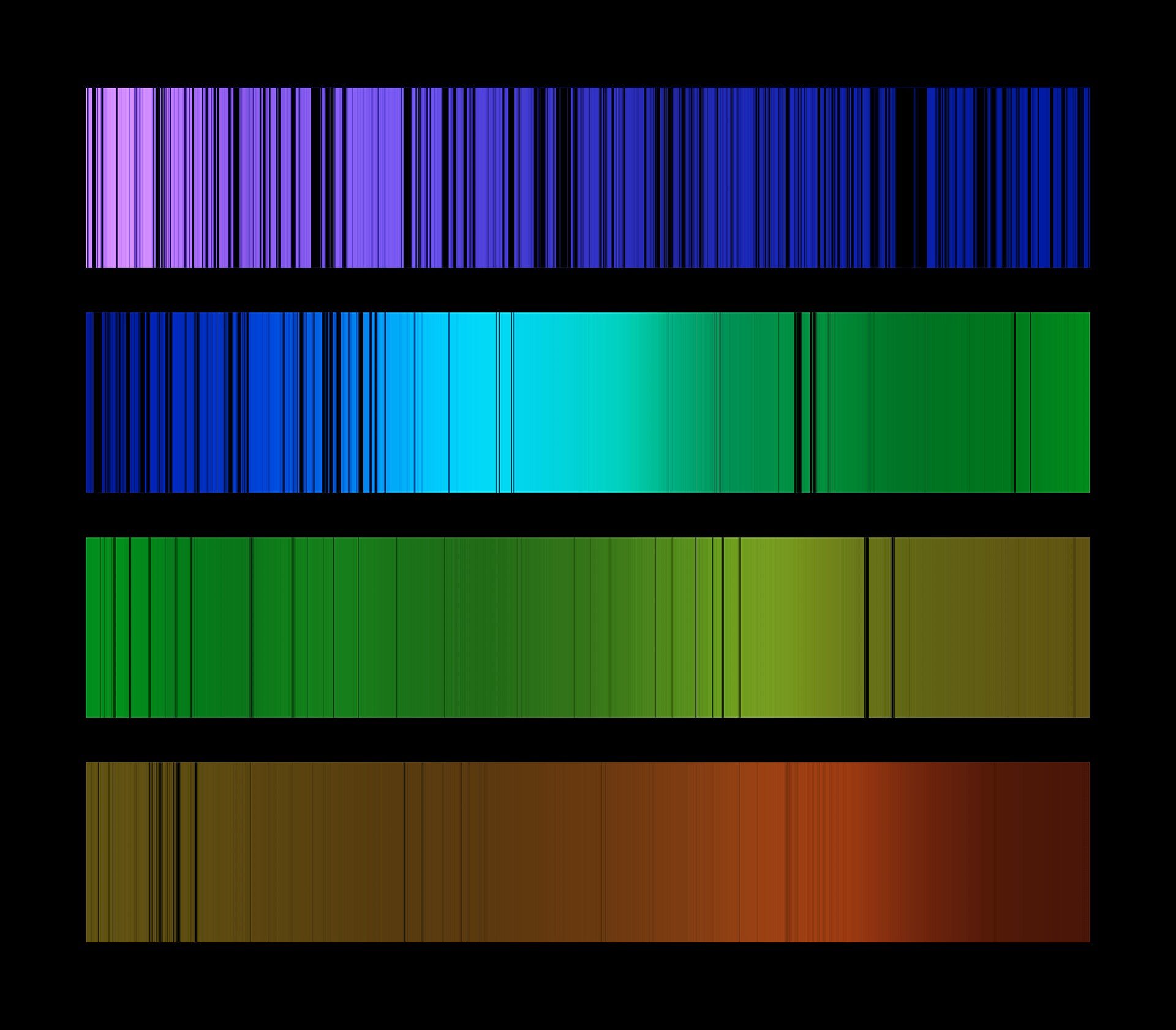
Primordial deuterium is measured in very distant gas clouds through absorption lines in quasar spectra. Astronomers seek systems that have been only weakly enriched by stars in order to approximate the initial composition as closely as possible.
Because stars destroy deuterium and there is no known astrophysical mechanism that produces it in large quantities, its abundance is an especially clean probe of primordial baryon density.
Further reading: https://arxiv.org/abs/2401.15054
Primordial helium in metal-poor regions
The primordial abundance of helium-4 is estimated mainly in ionized regions poor in heavy elements. Astronomers measure hydrogen and helium emission lines and correct for temperature, density, and later stellar production.
The procedure is more complex than a simple ratio might suggest. Even so, the high helium content agrees with the prediction that almost all surviving neutrons became bound inside helium-4 during nucleosynthesis.
Further reading: https://ccwww.kek.jp/pdg/2025/reviews/rpp2025-rev-bbang-nucleosynthesis.pdf | https://arxiv.org/abs/2401.15054
The lithium problem
Lithium-7 is the best-known discrepancy in standard nucleosynthesis. For the baryon density indicated by the cosmic microwave background, calculations predict more lithium than is observed in the atmospheres of certain ancient, metal-poor stars.
It is unclear whether the difference is caused by stellar processes that destroy or redistribute lithium, observational uncertainties, nuclear reaction rates, or still-unknown physics. The problem remains open.
Further reading: https://ccwww.kek.jp/pdg/2025/reviews/rpp2025-rev-bbang-nucleosynthesis.pdf | https://arxiv.org/abs/2401.15054
What lies beyond secure knowledge
The account combines different levels of certainty. Expansion from a hot state, primordial nucleosynthesis, and the existence of the cosmic background are strongly supported. Neutrino decoupling, electron–positron annihilation, and the nuclear reaction network are calculated within extensively tested theories.
By contrast, the Planck regime, the exact mechanism of inflation, baryogenesis, and a quantum theory of gravity remain open questions. Likewise, it is reasonable to speak of effective physical laws and symmetry breaking as the universe cooled, but not to state as an established fact that every law “came into being” at an identifiable instant.
Further reading: https://science.nasa.gov/universe/overview/ | https://home.cern/science/physics/higgs-boson/what | https://home.cern/science/physics/early-universe
Baryon density: one parameter tested in two ways
The baryon-to-photon ratio governs the efficiency of nucleosynthesis. A higher baryon density consumes more deuterium and slightly changes other abundances; a lower density leaves more residual deuterium.
The same parameter is independently derived from anisotropies in the cosmic microwave background. The compatibility of the two methods is one of the most important agreements in modern cosmology.
Further reading: https://arxiv.org/abs/2401.15054 | https://www.esa.int/Science_Exploration/Space_Science/Planck/Planck_and_the_cosmic_microwave_background
Effective number of neutrinos and early expansion
Primordial neutrinos contribute to the radiation density and therefore to the expansion rate. This effect is summarized by the effective number of relativistic species, N_eff. The standard value is not exactly three because neutrino decoupling and electron–positron annihilation are not instantaneous processes.
Faster expansion would leave less time for conversions and reactions, altering helium-4 and deuterium in particular. Nucleosynthesis therefore constrains additional light particles or forms of “dark radiation.”
Further reading: https://ccwww.kek.jp/pdg/2025/reviews/rpp2025-rev-bbang-nucleosynthesis.pdf | https://arxiv.org/abs/2401.15054
Inflation seen through its traces, not a photograph
If inflation occurred, it left no direct photograph. Its support comes from indirect traces: large-scale homogeneity, near spatial flatness, and a spectrum of primordial perturbations compatible with what is later observed in the cosmic microwave background and the structure of the universe.
This evidence favors the general idea of a very early period of accelerated expansion, but it does not yet identify the responsible field or select a single model. Inflation should be presented as a highly influential and testable hypothesis, not as an observed scene.
Further reading: https://science.nasa.gov/universe/overview/
The Standard Model: backbone and frontier
Much of this timeline rests on the Standard Model: quarks, leptons, neutrinos, photons, gluons, weak bosons, and the Higgs mechanism. This theory describes particles and interactions and, when combined with relativity and nuclear physics, reconstructs much of the early thermal evolution.
But the Standard Model contains no quantum theory of gravity, does not explain dark matter, does not determine the mechanism of inflation, and does not by itself produce a sufficient matter–antimatter asymmetry. It is both the backbone of the account and the boundary of what remains to be understood.
Further reading: https://home.cern/science/physics/standard-model | https://home.cern/science/physics/higgs-boson/what